
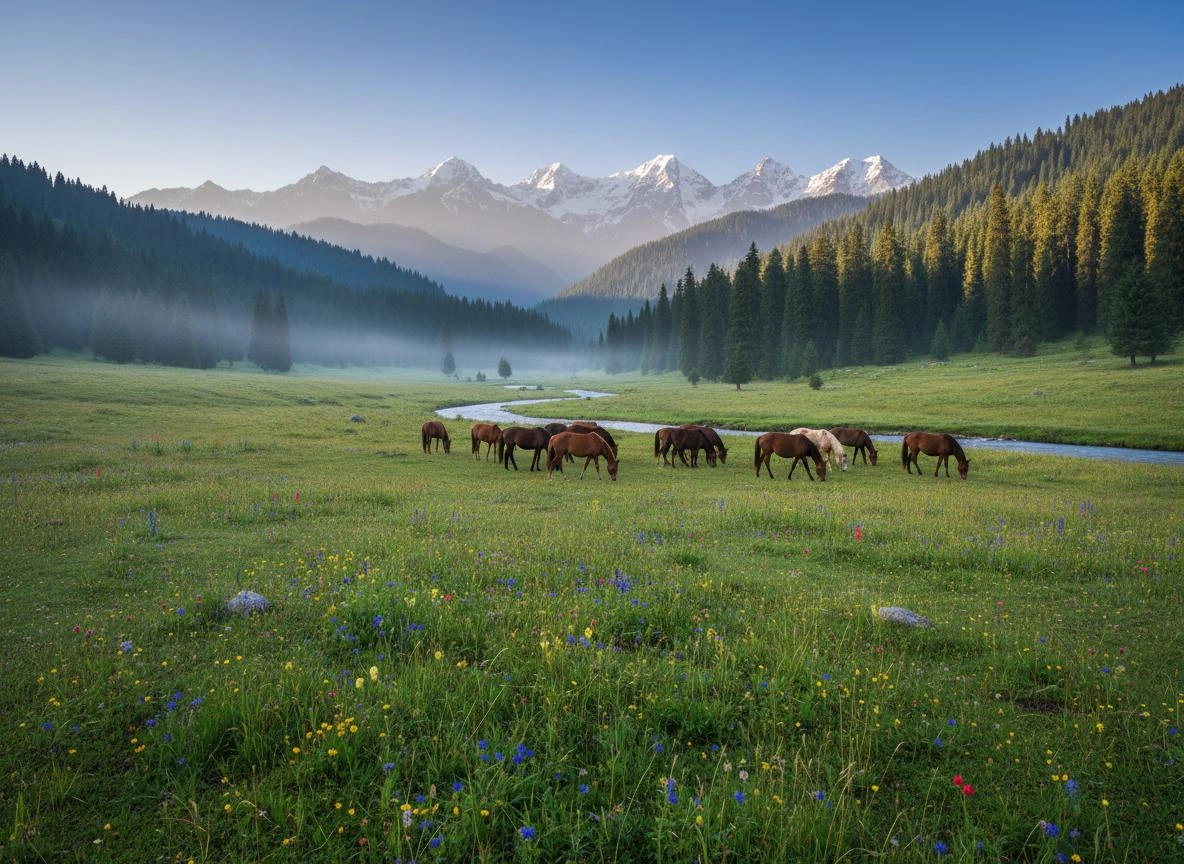
Twelve kilometres from Pahalgam, the road stops being a road and turns into something closer to a corridor between pine trees, with the Lidder River running alongside it the whole way. That’s Aru Valley Kashmir — a meadow-and-mountain village in the Anantnag district that most tourists only hear about after they’ve already booked a Pahalgam trip and someone mentions, almost in passing, that there’s somewhere quieter just up the road. This guide covers everything you need to plan a visit to Aru Valley Kashmir: when to go, how to get there, what the treks actually involve, and where you’ll sleep once you arrive.
Where Is Aru Valley Kashmir and Why It Matters
Aru Valley Kashmir sits at roughly 2,400 metres (about 7,875 feet) above sea level, on the banks of the Lidder River, inside what is now the Overa-Aru Wildlife Sanctuary. It’s about 12 km from Pahalgam and somewhere between 90 and 110 km from Srinagar, depending on which route your driver takes. On paper it looks like a footnote to Pahalgam. In practice, it’s the launch point for some of Kashmir’s best-known high-altitude treks, and the meadows around the village are worth the trip even if you never put on hiking boots.
A quick reference before we go further:
- State/District: Jammu & Kashmir, Anantnag district
- Nearest town: Pahalgam (12 km, roughly 30–45 minutes by road)
- Distance from Srinagar: ~90–110 km (2.5–3.5 hours by road)
- Altitude: ~2,400 m / 7,875 ft
- River: Lidder River
- Known for: Meadows, base camp for Kolahoi Glacier and Tarsar-Marsar treks, horse riding, camping, fishing
Distance & How to Reach Aru Valley Kashmir from Key Locations
| Starting Point / Landmark | Approximate Distance | Typical Travel Time | Route & Key Transit Notes |
| Pahalgam Main Town (Taxi Stand) | ~12 km | 30–40 mins | Scenic, winding road alongside the Lidder River into Overa-Aru Wildlife Sanctuary. |
| Betaab Valley (Hajan Valley) | ~22 km | 45–55 mins | Drive back toward Pahalgam/KP Road and follow Chandanwari route. |
| Chandanwari (Amarnath Base) | ~28 km | 1.0 to 1.25 hours | Via Pahalgam hub; crosses over to the eastern bank of the Lidder. |
| Anantnag Town (District HQ) | ~54 km | 1.5 to 1.75 hours | Via NH44/KP Road through Mattan, Aishmuqam, and Pahalgam. |
| Srinagar City Centre (Lal Chowk) | ~102 km | 2.5 to 3.0 hours | Via NH44 (Srinagar–Jammu Highway) → Awantipora → Bijbehara → Anantnag/KP Road → Pahalgam → Aru. |
| Srinagar International Airport (SXR) | ~105 km | 2.75 to 3.25 hours | Via Airport Road → Hyderpora Bypass → NH44 → Bijbehara → Pahalgam → Aru. |
Best Time to Visit Aru Valley Kashmir
There isn’t a single “correct” month for Aru Valley Kashmir — it depends on what you want out of the trip.
- Spring (March–May): The snow is melting, the meadows are turning green again, and wildflowers start showing up on the slopes. Days are mild, nights are still cold, so pack layers. This is a good window if you want fewer crowds than peak summer.
- Summer (June–August): This is when most people show up to Aru Valley Kashmir, and for good reason — daytime temperatures sit comfortably between 15°C and 25°C, the meadows are at their greenest, and this is the main season for trekking, horse riding, and river rafting on the Lidder. Book accommodation ahead if you’re travelling in July or August.
- Autumn (September–November): Quieter, cooler, and arguably the most photogenic stretch of the year, with the hillsides turning gold and rust. Trekking is still possible in September and early October before the passes start closing.
- Winter (December–February): Aru Valley Kashmir turns into a genuinely different place — snow-covered meadows, temperatures that can drop below -5°C, and limited road access from Pahalgam during heavy snowfall. It’s the least crowded time to visit and appeals to travellers who specifically want the snow, but it’s not the season for trekking to the glacier.
If you’re weighing this against snow season elsewhere in the valley, our guide to Kashmir’s snowfall season breaks down the month-by-month picture for Srinagar, Gulmarg, and Pahalgam too.
How to Reach Aru Valley Kashmir
- By air: The nearest airport is Sheikh ul-Alam International Airport in Srinagar, about 95 km from Pahalgam and roughly 100–110 km from Aru Valley Kashmir. It’s connected to Delhi, Mumbai, Bengaluru, and most other major Indian cities.
- By rail: Jammu Tawi is the nearest major railhead. From Jammu, you’ll need a taxi or bus to Srinagar or directly to Pahalgam, which adds several hours to the journey.
- By road: From Srinagar, it’s about a 2.5 to 3.5-hour drive to Pahalgam. From Pahalgam, Aru Valley Kashmir is another 30–45 minutes on a narrow but scenic road that winds through forest and past the Lidder River. There’s no public bus service into the valley itself, so you’ll want a private taxi or a cab arranged from Pahalgam. If you’re travelling in winter, check road conditions before you leave — heavy snowfall can close this stretch temporarily.
For the wider logistics — permits, connectivity, what to pack — our Kashmir travel guide FAQs page answers the questions we get asked most before a trip.
Aru Valley Kashmir as a Trekking Base
This is really what puts Aru Valley Kashmir on the map for serious trekkers. Three routes in particular start (or pass through) here:
- Kolahoi Glacier Trek: The classic. From Aru, the trail runs through Lidderwat and Satlanjan before reaching the glacier at the base of Kolahoi Peak, the highest point in the Kashmir Valley at over 5,400 m. Expect steep, rocky sections past Lidderwat, and give yourself time to acclimatise — this isn’t a trek for a first-time hiker.
- Tarsar-Marsar Trek: Widely considered one of the most beautiful treks in India. It starts from Aru Valley Kashmir and loops through Shekwas and Sundarsar before reaching the twin alpine lakes of Tarsar and Marsar, with campsites along the way that feel about as remote as Kashmir gets. We’ve mapped more routes like this one in our guide to Kashmir’s alpine lake treks.
- Lidderwat Trek: A shorter, more accessible option if you want a taste of the high-altitude scenery without committing to a multi-day expedition. It also connects to both of the routes above if you want to extend the trip.
Most Indian nationals don’t need special permits for these standard treks, though some routes near the Line of Control or inside protected forest sections may require local police or forest department clearance — it’s worth confirming with a registered trekking agency before you go. Foreign travellers should double-check current permit requirements, since these can change. If you’d rather have the logistics handled for you, our 7-day Kashmir Adventure tour is built around trekking and rafting routes that start right here in Aru Valley Kashmir.
Things to Do in Aru Valley (Beyond Trekking)
You don’t need to be a trekker to enjoy Aru Valley. Some of the more popular ways to spend a day here:
- Horse riding: Pony rides through the meadows are one of the easiest ways to see the valley, and they’re popular with families and older travellers.
- Camping: Riverside campsites along the Lidder are common for both independent travellers and organised trek groups.
- Fishing: The Lidder River is known for trout, and April to October is generally considered the best stretch for it.
- Birdwatching: Look out for the Himalayan Monal, Golden Eagle, and Black Bulbul, especially in summer and autumn when bird activity picks up.
- River rafting: Seasonal, usually April to June, when snowmelt raises the water level on the Lidder.
- Winter sports: Once the snow settles in, the valley sees some skiing and even heli-skiing for travellers looking for something beyond Gulmarg’s slopes.
Where to Stay in Aru Valley
Accommodation in Aru Valley is modest compared to Pahalgam — think small guesthouses and wooden homestays rather than resorts. That’s part of the appeal for a lot of travellers. If you want more comfort or a wider choice of hotels, basing yourself in Pahalgam and doing Aru Valley Kashmir as a day trip is a common approach, especially if you’re not trekking onward. For anyone planning to start a multi-day trek from here, staying a night in the valley before setting off is worth it — it saves an early-morning taxi ride and lets you start walking with some acclimatisation already done.
If you’d rather have it pre-arranged, our Kashmir tour packages include stays in and around Pahalgam as part of the wider itinerary, so you’re not chasing down guesthouses on arrival.
Travel Tips for Visiting Aru Valley
- Network coverage is patchy — BSNL postpaid tends to work best; don’t count on a strong signal once you’re past Pahalgam.
- Carry cash. ATMs and fuel stations are in Pahalgam, not in the valley itself.
- Layer up regardless of season. Even in summer, evenings get cold fast at this altitude.
- Book a registered guide for treks. Especially for Kolahoi Glacier and Tarsar-Marsar, a local guide isn’t just a formality — the trail conditions change quickly and route-finding beyond Lidderwat isn’t always obvious.
- Combine it with Betaab Valley, only around 22 km away, or with a few lesser-known stops from our Pahalgam offbeat trails guide if you want to get further off the main road.
- Start early and travel off-peak where you can — the road narrows past Pahalgam, and our tips for avoiding Kashmir’s tourist crowds apply just as much out here as they do in Srinagar and Gulmarg.
Plan Your Aru Valley Kashmir Trip With Us
Travel Nerve Kashmir is based in Rafiabad, close to the routes most visitors take toward Pahalgam and Aru. If you’d like to stop by, talk through an itinerary in person, or just confirm we’re a real, findable business before you book, you can find us on Google maps.gle Maps or Bing Maps.
Frequently Asked Questions
Is Aru Valley worth visiting if I’m not trekking?
Yes. The meadows, river views, and pony rides are enough of a reason on their own — plenty of visitors treat it as a half-day or full-day trip from Pahalgam without doing any of the treks.
How far is Aru Valley Kashmir from Pahalgam?
About 12 km, which takes roughly 30–45 minutes by taxi on a scenic but narrow road.
Is there an entry fee for Aru Valley?
No general entry fee for the meadows themselves, though specific treks or camping inside the wildlife sanctuary may involve separate charges.
What is the best month to visit Aru Valley Kashmir for trekking?
June through September gives you the most stable trail conditions for Kolahoi Glacier and Tarsar-Marsar, with July and August being the busiest.
Do I need a permit to visit Aru Valley Kashmir?
Most Indian travellers don’t need a permit for the valley itself or standard treks. Some restricted routes and foreign nationals may have additional requirements, so it’s worth checking with a local trekking operator ahead of time.
Final Thoughts
Aru Valley Kashmir works whether you’re coming for one afternoon of pony rides by the river or a five-day trek to Tarsar-Marsar. It’s close enough to Pahalgam to add on without much planning, and remote enough to feel like a genuine break from the more crowded parts of Kashmir tourism. If you’re building out a longer itinerary, browse the rest of our Kashmir destinations — Doodhpathri pairs especially well with a trip out this way — or get in touch and we’ll help you plan the rest of the trip around Aru Valley Kashmir.