
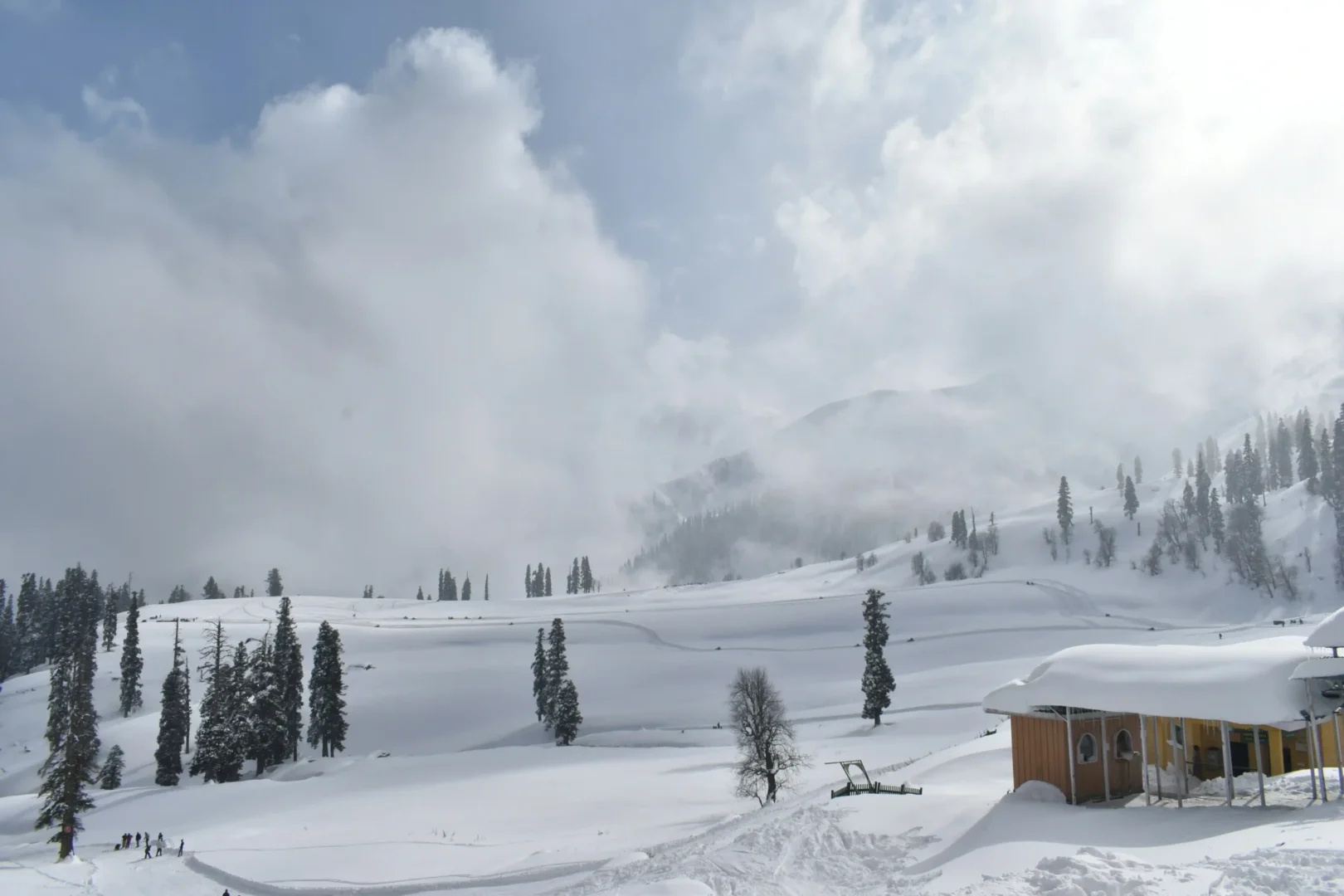
The best time to visit Kashmir for snowfall is between December and February, with January as the peak month during Chillai Kalan, Kashmir’s harshest 40-day winter spell. But snow never arrives on a promised date. In both of the last two winters, rain and snow ran far below normal for weeks, and Gulmarg still held snow while Srinagar stayed dry. This guide shows when and where snow falls, what recent winters really looked like, and how to choose dates with a safety margin.
Active snowfall and standing snow cover are two different experiences. High-altitude Gulmarg can sit under deep powder on a clear, sunny January morning without a single flake falling. This guide to the best time to visit Kashmir for snowfall is updated for the 2026-27 winter season. If you want to see how winter compares with spring, summer and autumn, our ultimate Kashmir travel guide 2026 puts the whole year side by side.
If you would rather skip the research, our Kashmir winter tour packages turn the best time to visit Kashmir for snowfall into a ready plan with stays, a private car and Gondola help. Snow in the first cold month is patchy, and our Kashmir in November guide shows where it usually falls first.
Best Time to Visit Kashmir for Snowfall: Quick Summary
These are the headline answers on the best time to visit Kashmir for snowfall, before we go month by month.
| Question | Short answer |
|---|---|
| Core snow season | December to February |
| Peak snowfall and powder month | January (Chillai Kalan) |
| Best balance of snow and easy roads | Early to mid February |
| Early winter, pre-peak snow | Mid to late December, but unpredictable |
| Late-season snow | March, at high altitude only (upper Gulmarg and Sonmarg) |
| Best for thinner crowds and value | November and March |
| Most reliable snow | Gulmarg in January and February |
| Main snow destinations | Gulmarg, Sonmarg, Pahalgam and Doodhpathri |
Month-by-Month Kashmir Snow Breakdown
Use this table to pick the best time to visit Kashmir for snowfall for your dates. The ratings describe a typical winter, not a forecast.
| Month | Snow chance | Typical temperatures | Snow conditions | Travel notes |
|---|---|---|---|---|
| November | Low, high altitude only | Cold, dropping through the month | First light dustings on Gulmarg and upper Sonmarg. Srinagar and Pahalgam stay largely snow-free | Roads open, thinner crowds, lower hotel rates |
| December | Moderate, builds from mid-month | -2 C to 10 C | Early snow from mid-month. Gulmarg builds solid cover while Srinagar is mostly dry | Roads open, mild frost, chains needed on the Tangmarg-Gulmarg road |
| January | Highest | -6 C to 5 C | Chillai Kalan brings the heaviest and longest-lasting snow in the high valleys | Flight delays possible at Srinagar airport, heavy snow can close mountain roads for a day or two |
| February | High and steadier | -3 C to 8 C | Deep standing snowpack in the meadows, brighter sunshine, stable ski slopes | Smoother highway transit, Gondola runs more consistently, fewer flight disruptions |
| March | Low to moderate, high altitude only | 3 C to 14 C | Lower valleys thaw. Upper Gulmarg and Sonmarg keep heavy snow | Clear roads, lower hotel rates, spring begins |
Monthly Breakdown: When Is the Best Time to Visit Kashmir for Snowfall?
November: First Flurries, Not a Full Snow Trip
Snowfall can begin as early as mid to late November, but only at higher elevations. Gulmarg and the upper reaches of Sonmarg see the first light dustings, while Srinagar and Pahalgam stay largely snow-free. This is not the best time to visit Kashmir for snowfall if guaranteed snow cover is your goal. It is a good window if you want thinner crowds, lower hotel rates and the tail end of autumn colour next to the first hint of winter. Book November for value and quiet, not for snow certainty. If autumn colour is part of your reason for going, see our guide to autumn in Kashmir.
December: Season Opening and Festive Rush
Snow typically starts in early to mid December, and the real build-up usually comes from mid December into mid January. High-altitude meadows in Gulmarg and Sonmarg turn white well before Srinagar sees any snow. The first half of December is the least predictable stretch: some years bring early snow, others bring almost none outside upper Gulmarg. If your dates are fixed for late December, base yourself in a higher valley. If you are travelling over the festive week itself, hotels and Gondola slots fill first, so our Christmas and New Year in Kashmir package takes care of the bookings. First snow dates change every year, and our December in Kashmir guide explains how likely snow is at each stop.
January: The Peak of Chillai Kalan
January is widely seen as the single best time to visit Kashmir for snowfall. Sub-zero temperatures stop accumulated snow from melting, so Gulmarg, Pahalgam, Doodhpathri and Sonmarg stay white for weeks. It is also the coldest and busiest month, with the most flight and road disruption. For dates, daily life and what to expect, read our Chillai Kalan guide for 2026-27.
February: Stable Snowpack and Winter Sports
Heavy snow cover still blankets the mountains, with longer daylight and fewer weather-related road closures than in January. Early February is often the sweet spot for travellers who want deep snow without the busiest crowds. For anyone who wants deep snow without peak-month disruption, February is an ideal best time to visit Kashmir for snowfall. Do not assume it is automatically milder: cold snaps and heavy spells still happen.
March: High-Altitude Late Season
As temperatures rise, snow thaws across Srinagar and the lower valleys. Gulmarg’s higher slopes, including Kongdori and the upper Gondola station, keep deep snow that is good for spring skiing and late-season winter tours. March is a late-season option for high places, not the best time to visit Kashmir for snowfall across the whole Valley.
What Recent Winters Really Looked Like
Most guides promise snow in January. The last two winters show why the best time to visit Kashmir for snowfall needs flexibility.
Winter 2024-25: Chillai Kalan stayed almost dry, with only a single spell of snow, and the Khelo India winter games at Gulmarg were postponed for lack of snow. Heavy snow arrived only in late February, when Gulmarg picked up two to three feet.
Winter 2025-26: Rain and snow from December to February ran about 65 per cent below normal. December was about 78 per cent below normal, January about 23 per cent below, and February about 89 per cent below. January still brought fresh snow to Gulmarg around January 22 and 23, and higher reaches saw more snow again in March.
The lesson is simple: the best time to visit Kashmir for snowfall is a window, not a date. Gulmarg, Sonmarg and the other high places usually hold some snow even in dry winters, but the plains may see only rain. If you must travel in a fixed week, choose a high base, keep a spare day, and avoid paying for non-refundable extras before the forecast is clear.
Where to See the Best Snow in Kashmir
Where you stay matters as much as the best time to visit Kashmir for snowfall, because altitude decides how much snow you actually see.
Gulmarg. At about 2,650 metres, Gulmarg is the premier winter sports destination in the region and the most reliable snow in Kashmir at the best time to visit Kashmir for snowfall. The meadows usually hold snow from December through March, and sometimes into early April. The Gondola rises to nearly 4,000 metres for skiing and alpine views, and you can reserve tickets through our Gulmarg Gondola ticket booking page. For a commercial plan that bundles stays and transfers, see our Gulmarg tour packages. For the resort itself, read our Gulmarg Kashmir destination guide and our page on Gulmarg: Asia’s Premier Ski Destination.
Pahalgam. A quieter winter base where the Lidder River edges with ice. Aru Valley and Betaab Valley offer pine-fringed snowscapes and peaceful walks. If crowds put you off, Pahalgam is a calm way to enjoy the best time to visit Kashmir for snowfall. Our Pahalgam travel guide has the full picture, and our guide to Pahalgam in winter shows what is open month by month. You can also see our Pahalgam tour packages.
Sonmarg. Known as the Meadow of Gold, Sonmarg turns into a wide white field in winter. Since the Z-Morh Tunnel opened in January 2025, the Srinagar to Sonmarg road has stayed open on most days, so a winter day trip in the best time to visit Kashmir for snowfall is realistic. Services are limited, so read our Sonmarg guide and our Sonamarg in winter guide before you go.
Zoji La beyond Sonmarg is a separate matter. The Border Roads Organisation kept it open for most of winter 2025-26, but a deadly avalanche near Zero Point on March 27, 2026 shows the risk. If Leh is part of your plan, check the Ladakh side of the journey on the official Ladakh Tourism website and read our Srinagar to Leh road trip and permit details.
Doodhpathri. A pine-fringed meadow that becomes a soft white bowl after fresh snow. It is a quiet choice in the best time to visit Kashmir for snowfall, but the last few kilometres can be slippery, so go with a driver who knows the road. Our Doodhpathri destination guide and Doodhpathri day trip itinerary from Srinagar cover the route.
Srinagar. Even in the best time to visit Kashmir for snowfall, snow in the city is the least reliable of all. Some winters bring a few snowy days, mostly in January and early February, and dry winters bring only rain. When it does snow, a dusted Dal Lake shoreline and snow-covered Mughal Gardens make unique photographs. Dal Lake can partly freeze in a hard cold snap, and our guide to frozen Dal Lake explains what that really looks like and why you should never walk on the ice. A houseboat stay with a traditional bukhari (wood-fire) heater is the classic winter experience, and our heritage houseboat stay shows what that looks like.
Understanding Chillai Kalan, Chillai Khurd and Chillai Bachha
Kashmiri winter is traditionally split into three phases by cold intensity. Knowing them helps you pick the best time to visit Kashmir for snowfall, because the cold does not end on January 30.
| Phase | Dates | Length | What it means |
|---|---|---|---|
| Chillai Kalan | December 21 to about January 30 | 40 days | The core cold, the best chance of heavy and lasting snow, sub-zero nights |
| Chillai Khurd (“small cold”) | January 31 to February 19 | 20 days | Still cold and snowy, but the intensity eases |
| Chillai Bachha (“baby cold”) | February 20 to March 2 | 10 days | The tail of winter, sometimes mild, sometimes a last cold snap |
In 2026-27 these run from December 21, 2026 to March 2, 2027. For most travellers, the best time to visit Kashmir for snowfall in 2026-27 sits inside Chillai Kalan and early Chillai Khurd.
Standing Snow Cover vs Fresh Snowfall
Active snowfall depends on incoming western disturbances and cannot be promised for a given date. Standing snow cover builds up from mid December and usually peaks between January and February across Gulmarg, Sonmarg and Pahalgam. If you plan around when snow lies on the ground, you can enjoy the best time to visit Kashmir for snowfall even on bright, clear days. Falling snow is a bonus on top of the best time to visit Kashmir for snowfall, and the postcard scenes mostly come from the days after a snowfall, when the sky clears.
To stay warm when temperatures fall well below freezing, use our Kashmir winter packing guide for layering and footwear.
Winter Route and Transit Comparison
Distances matter when you plan around the best time to visit Kashmir for snowfall, because snow adds time to every drive.
| Destination | Distance from Srinagar | Typical winter time | Road notes |
|---|---|---|---|
| Gulmarg | About 51 km | 2.0 to 2.5 hours | Tangmarg to Gulmarg needs snow chains or a 4×4 during active snow |
| Pahalgam | About 90 km | 2.5 to 3.0 hours | The four-lane highway to Anantnag stays mostly clear, with slight ice near the Lidder banks |
| Sonmarg | About 80 km | 2.5 to 3.0 hours | Via the Z-Morh tunnel, higher reaches see periodic clearance work |
| Doodhpathri | About 42 km | 1.5 to 2.0 hours | Scenic pine drive, the last 5 km can be slippery after fresh snow |
Some roads close for days after heavy snow, including the Mughal Road and the road to Gurez Valley. If Gurez is on your list, read our guide to Gurez Valley in winter before you plan around the best time to visit Kashmir for snowfall, because that road usually stays shut for months in a normal winter. For official advisories, check the J&K Tourism website.
How to Reach Kashmir in Winter: Flight, Train or Road
Whichever month you pick as the best time to visit Kashmir for snowfall, getting there needs a plan. Most snow guides skip this part, and it matters as much as the month.
- By train: The Katra to Srinagar Vande Bharat began running in June 2025, and the trip takes about three hours. The trains are built for Kashmir’s winters, with anti-freezing systems, and a Jammu Tawi to Srinagar service has since been added. Check the current timetable before you book.
- By air: Srinagar airport is the fastest way in, but fog and low visibility cause delays during snow spells. Avoid tight connections on arrival and departure days.
- By road: The Jammu to Srinagar highway can close after landslides or heavy weather. If you are driving, keep a spare day in your plan, and do not travel at night.
Best Time to Visit Kashmir for Snowfall: Costs and Booking Tips
Winter prices swing more than summer prices, so book around the best time to visit Kashmir for snowfall with the calendar in mind. For a budget view of the best time to visit Kashmir for snowfall, see our Kashmir trip cost for 5 days page. For the heaviest snow, read our Kashmir in January guide, which also lists what to avoid. Snow stays deep through February, and our Kashmir in February guide explains what to expect as the season changes.
- Late December to mid January is peak. Hotels, Gondola slots and flights fill first, and rates rise. Book four to six weeks ahead for these dates.
- Gala dinners. On December 24, 25 and 31, many hotels add a compulsory gala dinner billed directly by the hotel. Ask for the amount before you confirm.
- February and March are the value months. Rates are lower, and Gulmarg still holds snow.
- Ask about heating. Heating, hot water and power backup vary from hotel to hotel, so confirm before you pay.
- Keep refund terms clear. Weather or road-closure refunds usually depend on what the hotel or driver charges, so read the terms first.
Plan this trip with local Srinagar experts
Our Kashmir winter packages start from Rs 8,500 per person for 3 nights and 4 days, and from Rs 10,500 for 4 nights and 5 days (land-only, twin sharing, indicative). Tell us your snow dates and we send a plan and a fair quote, with a high base and a spare weather day built in. We also tell you about any cost change before we act.
Tap the WhatsApp or call button on this page, or send us your trip dates.
See our current winter packages and prices, our 3N/4D winter package or every package we run.
Safety Tips for a Snowfall Trip
A few habits keep the best time to visit Kashmir for snowfall safe as well as scenic.
- Use snow chains or a 4×4 on the Tangmarg to Gulmarg road during snow.
- Never walk on frozen water, including Dal Lake.
- Ventilate any room with a bukhari or heater, because enclosed fires are dangerous.
- Carry copies of your ID, and keep power banks charged, since cold drains batteries fast.
- Leave a spare day around flights, because fog and snow can delay them.
- Check road status each morning before you start, especially for Sonmarg and Zoji La.
Best Time to Visit Kashmir for Snowfall by Traveller Type
Your reason for travelling changes the best time to visit Kashmir for snowfall. Use this as a quick guide.
| Traveller | Best months | Why |
|---|---|---|
| Honeymooners | January and February | The deepest snow with warm, cosy stays |
| Families with children | Early to mid February | Stable snowpack, easier roads, fewer flight disruptions |
| Skiers and snowboarders | January and February for powder, March for spring skiing | Upper Gulmarg keeps snow longest |
| Budget travellers | November, late February and March | Lower hotel rates |
| Photographers | January and early February | Snow-dusted shorelines and white meadows in clear light |
| First-time snow seekers | Late January to mid February | The best mix of snow cover and workable roads |
Planning Your Kashmir Winter Itinerary
Once you have chosen the best time to visit Kashmir for snowfall, build the rest of the trip around it.
- Skiing and adventure: If downhill skiing is your main goal, read our guide on how to plan a winter ski trip to Gulmarg.
- Comparing months: Our month-by-month guide to Kashmir in winter shows what November, December, January, February and March are really like.
- Festive dates: The Christmas and New Year period is the busiest part of the best time to visit Kashmir for snowfall, so book early and confirm gala dinner charges.
- Offbeat and quiet: For fewer crowds, Pahalgam and Doodhpathri give snow with much less company than Gulmarg. Our guide to offbeat places in Kashmir lists more quiet options for the best time to visit Kashmir for snowfall.
- A set plan: Our Srinagar, Gulmarg and Pahalgam tour package and customized Kashmir holiday packages can be set around your snow dates.
Who Should Not Plan Around Snow Alone
This page is not for everyone. Even the best time to visit Kashmir for snowfall cannot promise snow on a given day. Skip a snow-only trip if you have one fixed week in early December and need guaranteed snow in Srinagar. Skip it if you need guaranteed skiing, because a dry winter can delay slopes and events. Skip it if you cannot accept a delay or a spare day for weather. In those cases, plan Kashmir for spring or autumn instead and treat any snow as a bonus.
Common Mistakes
- Booking early December and expecting deep snow in the city.
- Assuming snowfall is guaranteed on any date, even in January.
- Choosing dates without checking the best time to visit Kashmir for snowfall for the place you are visiting.
- Planning a same-day flight or train after a snowy drive.
- Skipping the heating, hot water and refund questions with your hotel.
- Using an old guide that says the Sonmarg road is shut all winter.
- Trying to do Gulmarg, Pahalgam and Sonmarg in one day.
Why Book Your Winter Holiday With a Local Operator
Choosing the best time to visit Kashmir for snowfall is only half the plan, because winter mountain travel needs local logistics too. Heavy snow can bring pass closures, changed flight times and rules that require chains on tyres. We are a local Srinagar operator, and for winter trips we plan:
- Vehicles with experienced winter drivers who know the snow roads.
- Gulmarg Gondola help for Phase 1 and Phase 2 inside your itinerary.
- Stays where heating and hot water are confirmed in advance.
- Road checks close to departure, with a back-up plan agreed before you travel.
We plan every trip around the best time to visit Kashmir for snowfall for your dates and group. You can read what recent travellers say about our winter trips on our Google Business profile, then use our Kashmir tour package booking page or contact our team with your dates. You can also browse all our Kashmir tour packages and Kashmir destinations.
Frequently Asked Questions
Does it snow in Srinagar?
Yes, but less reliably than in the mountains. Snowfall in Srinagar occurs mainly during January and early February, while Gulmarg, Sonamarg, and Pahalgam see snow much earlier in the season.
Is Sonamarg open in winter?
Yes. Since the Z-Morh Tunnel opened in January 2025, the Srinagar–Sonamarg stretch has all-weather connectivity, so December to February trips are realistic. Heavy snowfall can still cause short disruptions, and Zoji La beyond Sonamarg remains far more restricted, so check current road status before you leave Srinagar.
Which is better for snow, January or February?
January has the heaviest and most consistent snowfall during Chillai Kalan. February has a deep, stable snowpack with brighter days, longer daylight, and fewer road and flight disruptions, which makes it the easier month for most travellers.
Is snowfall guaranteed in Kashmir?
No. Fresh snowfall depends on incoming Western Disturbances and can’t be guaranteed on a specific date. Standing snow cover in Gulmarg, Sonamarg, and Pahalgam is far more dependable from late December through late February, which is why we plan around accumulation windows rather than single dates.
Can I visit Kashmir for snow in March?
Yes, at higher altitudes. Srinagar and the lower valleys start thawing, but upper Gulmarg (Kongdoori and Apharwat Peak) and Sonamarg retain deep snow, and hotel tariffs are lower.
Is there a train to Kashmir in winter?
Yes. The Katra–Srinagar Vande Bharat runs on trains designed for Kashmir’s winter conditions and takes about three hours between Katra and Srinagar
What is the single best month for snow in Kashmir?
January, during Chillai Kalan, offers the heaviest and most consistent snowfall across Gulmarg, Pahalgam, Sonmarg, and often Srinagar itself.
Is snow guaranteed if I visit in December to February?
Snow cover is highly likely within this window, especially in Gulmarg, but fresh snowfall on your exact travel dates is never guaranteed — plan for cover, treat actual snowfall as a bonus.
Does Srinagar get as much snow as Gulmarg?
No. Srinagar’s snowfall is less frequent and mainly limited to January and February, since Gulmarg’s higher altitude holds snow far more reliably.
Is February a good alternative to January?
Yes. February still sits within peak season with heavy snow cover, but travel logistics like flights and hotel availability tend to be slightly more predictable than in January.