
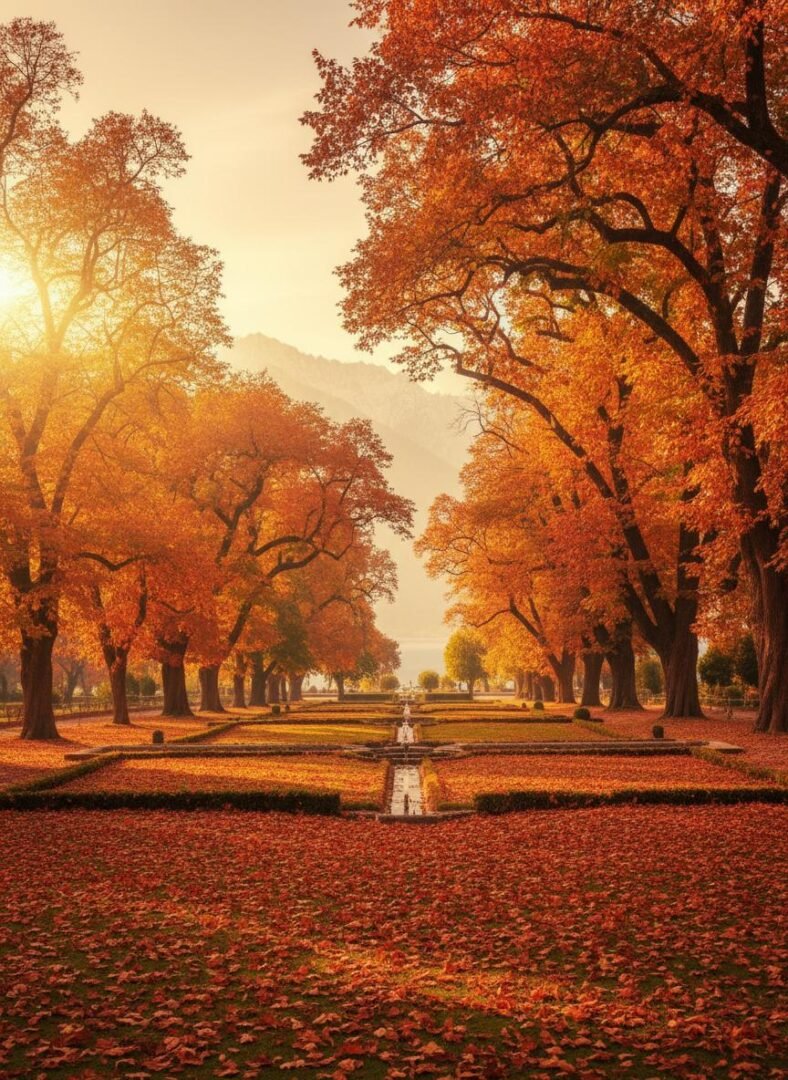
When the scorching heat of summer finally fades and a crisp, refreshing breeze sweeps across the high-altitude Himalayan valley, the northern paradise undergoes a dramatic, mesmerizing transformation. Locally cherished as Harud, this magnificent golden season brings forth Autumn in Kashmir: Nature’s Greatest Show. Stretching across the vibrant months of September, October, and November, the entire landscape morphs into a living painting filled with rich, warm hues of copper, amber, fiery red, and brilliant gold that stretch as far as the eye can see.
For avid travelers, professional landscape photographers, and peace-seekers longing for absolute tranquility, experiencing Autumn in Kashmir: Nature’s Greatest Show offers an escape far superior to the heavy tourist rushes of peak summer. Featuring pleasantly cool daytime temperatures, peaceful pathways, and stunning foliage at every twist and turn, this unique transitional season reveals the valley at its absolute aesthetic and cultural finest. To see how autumn compares with every other season, our ultimate Kashmir travel guide 2026 puts the whole year side by side.
Best Time for Autumn in Kashmir: Nature’s Greatest Show, Month by Month
The colour builds and fades in stages, so it helps to time your trip around Autumn in Kashmir: Nature’s Greatest Show rather than around a single date.
September: Summer warmth and greenery still linger, and the apple harvest is underway in the orchards. The first golden tints usually show toward the end of the month.
October: The strongest month for classic autumn colour. Chinar leaves begin to change in the first week, foliage peaks from mid-October, and the Pampore saffron bloom overlaps in the last part of the month.
November: Mornings turn colder, crowds thin out, and fewer leaves remain on the trees. Higher elevations such as Gulmarg and Sonamarg can see their first snow, which is why November also works as the doorway to winter. See our guide to the best time to visit Kashmir for snowfall if you’re deciding between the two seasons.
The Symphony of the Iconic Chinar Trees
At the very heart and soul of Autumn in Kashmir: Nature’s Greatest Show are the legendary Chinar trees. Deeply rooted in the cultural history and architectural heritage of the region, these magnificent centuries-old trees shed their deep emerald summer canopy to erupt into breathtaking shades of crimson, orange, and gold. The tree is so tied to Kashmiri identity that Sheikh Abdullah titled his autobiography Aatish-e-Chinar, “the fire of the Chinar”. Walking beneath their towering branches while fallen leaves crunch softly underfoot creates an unforgettable sensory journey.
Several historic locations turn into absolute hotspots for foliage enthusiasts during Autumn in Kashmir: Nature’s Greatest Show:
Naseem Bagh (Garden of Breezes): Situated on the western shores of Dal Lake within the University of Kashmir campus, this historic Mughal garden still holds hundreds of mature Chinar trees that turn a brilliant deep red, creating a glowing canopy that attracts photographers worldwide.
Shalimar and Nishat Bagh: The terraced lawns, cascading water fountains, and ancient stone channels of these royal Mughal masterpieces reflect stunning golden foliage against a backdrop of crisp blue skies and majestic mountains. For official information on Srinagar’s gardens, the J&K Tourism website is a good starting point.
Chinar Bagh, Dalgate: A riverside park on the Jhelum, with stately Chinars, wooden bridges, and houseboats moored along the bank, which makes it an easy foliage stop inside the city.
Char Chinar, Dal Lake: A charming small island graced by four majestic Chinar trees right in the center of the shimmering lake, delivering a classic postcard-perfect vista unique to the valley.
South Kashmir’s Aharbal Waterfall: Forest trails around the falls light up with autumn colour, which makes it a strong day trip if you want foliage away from the city gardens.
Photography tip: golden hour works best, roughly 7–9 AM and 5–7 PM. Use the water channels at Nishat Bagh for reflections, and Pari Mahal for wider views over the city when you photograph Autumn in Kashmir: Nature’s Greatest Show.
🍁 Experience Golden Autumn Season in Kashmir (Sept–Nov)
Book Autumn in Kashmir: Nature’s Greatest Show with crisp weather, golden Chinar leaves in Nishat Bagh, and lower hotel prices through our autumn tour packages.
👉 Explore Autumn Honeymoon Package | Browse Autumn Itineraries
A Magical Shikara Ride on Crystal Waters
No journey exploring Autumn in Kashmir: Nature’s Greatest Show is complete without gliding peacefully across the glassy waters of Dal Lake or Nigeen Lake on a traditional wooden Shikara. As the gentle morning mist rises from the water, the surrounding willow trees and distant mountain slopes reflect a rich tapestry of autumn colors, providing unmatched peace, quiet reflection, and visual harmony. To wake up on the water, see our heritage houseboat stay guide or browse our Dal Lake luxury houseboat packages.
The Purple Saffron Spectacle in Pampore
Autumn is universally recognized as the prime harvest season, and Autumn in Kashmir: Nature’s Greatest Show introduces travelers to a rare agricultural wonder. Between late October and early November, the historic saffron fields of Pampore burst into a delicate blanket of vibrant purple blossoms. Visitors can witness local farmers hand-picking these precious flowers during early morning hours, offering a fascinating window into cultivating the world’s most expensive spice, paired with fresh, piping-hot Kahwa tea tastings.
Timing matters here: the flowers open only in the morning and are usually harvested within a few days, so an early-morning visit gives you the best chance of seeing full colour and farmers at work. Bloom timing also shifts with weather and elevation, so confirm the current status before you go. Pampore is an easy half-day trip from Srinagar, and we plan it around the flowers rather than around a fixed date.
Harvest Delights: Apple and Walnut Orchards
Beyond visual splendor, Autumn in Kashmir: Nature’s Greatest Show is a season of rich agricultural abundance. The valley’s sprawling orchards in regions like Sopore, Shopian, and Pahalgam bend gracefully under the heavy weight of crisp, sweet apples and fresh walnuts. Local village markets overflow with seasonal produce, dried fruits, roasted chestnuts, and traditional winter provisions, making it a dream destination for food and culture enthusiasts looking to taste authentic local flavors.
Embracing Local Traditions and Autumn Cuisine
As the weather cools down in preparation for the upcoming winter months, the culinary landscape shifts to hearty comfort foods. Witnessing Autumn in Kashmir: Nature’s Greatest Show also means indulging in traditional seasonal delicacies. From slow-cooked local delicacies to warm spiced teas enjoyed beside traditional wood-fired bukharis, the local lifestyle during Harud is deeply welcoming and rich in heritage. For a full list of what to order, see our guide to Kashmiri cuisine and its 15 essential dishes.
Is Autumn in Kashmir: Nature’s Greatest Show Right for You?
Autumn suits travellers who want quieter sightseeing, cooler weather, harvest-season experiences, and photography. It’s less suited to a few goals:
Tulips: the flowers bloom in spring, so plan March–April for the Tulip Garden Srinagar.
Guaranteed snow and winter sports: plan for December onward, with our winter ski trip guide for Gulmarg as the starting point.
The widest range of high-altitude treks: summer is more reliable.
Practical Tips for Your Autumn Escape
Pack Layered Clothing: While daytime temperatures between 15°C and 23°C remain pleasantly warm, mornings and evenings turn quite chilly, requiring sweaters, scarves, and light jackets.
Book Early for Peak Foliage: The best of Autumn in Kashmir: Nature’s Greatest Show happens dynamically between mid-October and early November, making early itinerary planning crucial to catch the foliage at its prime.
Explore Beyond Srinagar: Extend your Autumn in Kashmir: Nature’s Greatest Show trip to include the golden alpine valleys of Gulmarg and Pahalgam for a comprehensive seasonal experience. For colour further off the main circuit, the Chinars and maples along the Kishanganga River in Gurez Valley turn warm autumn tones too, and our guide to offbeat places in Kashmir lists more quiet options.
Plan Your Autumn Journey With Us
Witnessing Autumn in Kashmir: Nature’s Greatest Show firsthand requires seamless local coordination, comfortable stays, and expertly curated itineraries. Let Travel Nerve Kashmir design your ultimate fall foliage expedition, blending cultural immersion with luxury travel, or start from our customized Kashmir holiday packages if you’d like a plan built around your dates and interests. You can also read recent traveller reviews on our Google Business Profile. Reach out to our team today to book your unforgettable autumn getaway!
Frequently Asked Questions About Autumn in Kashmir: Nature’s Greatest Show
When is the best time to visit Kashmir in autumn?
October is generally the strongest month for Autumn in Kashmir: Nature’s Greatest Show. Chinar leaves start changing in the first week, and foliage usually peaks from mid-October to early November.
What is Harud in Kashmir?
Harud is the local name for Kashmir’s autumn season, which runs from September to November.
When do Chinar leaves turn red in Kashmir?
Colour begins in the first week of October and peaks from mid-October to early November. By late November, many trees are already bare.
When do the saffron fields in Pampore bloom?
Typically from late October into early November, with the exact timing shifting by weather and elevation. The flowers open only in the morning and are harvested within days, so visit early in the day.
Is autumn a good time to visit Kashmir?
Yes, especially for foliage, photography, cooler weather, harvest experiences, and quieter gardens compared with summer, which is exactly what Autumn in Kashmir: Nature’s Greatest Show delivers. It’s less ideal if you want tulips, guaranteed snow, or the widest range of high-altitude treks.
What is the weather like in Kashmir in autumn?
Daytime temperatures are typically around 15°C to 23°C, while mornings and evenings turn chilly, so carry layers.
Does it snow in Kashmir in autumn?
Rarely in the main tourist areas. In November, Gulmarg and Sonamarg can see their first light snow at higher elevations, while Srinagar stays largely snow-free.
Which places have the best autumn colours in Kashmir?
Srinagar’s Mughal gardens (Nishat, Shalimar, Naseem Bagh), Chinar Bagh, Char Chinar on Dal Lake, Pahalgam, and Aharbal are popular choices.