
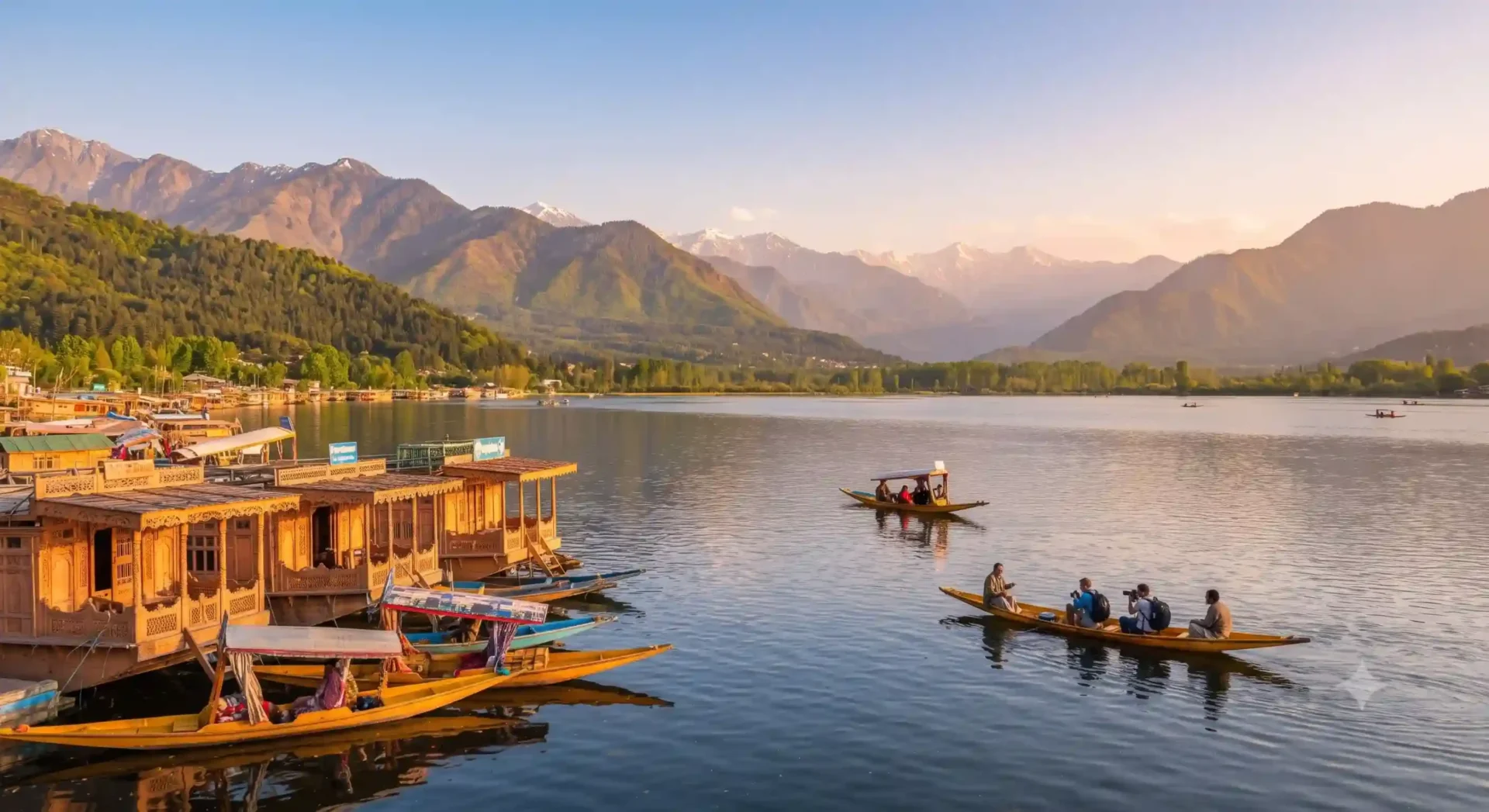
Most of what’s written for foreign tourists in Kashmir online is scattered — one page covers visas, another covers safety, a third mentions registration rules almost as an afterthought. If you’re planning a first trip to Kashmir from outside India, you shouldn’t need five browser tabs open just to figure out whether you need a permit, how to actually get here, and what happens the moment you land. This guide puts everything foreign tourists in Kashmir actually need in one place, written by people who live and work here rather than an aggregator repeating the same five facts.
Do You Need a Visa?
Yes — almost every foreign tourist in Kashmir needs a valid Indian visa, and for most nationalities, India’s e-Visa system covers it. It’s processed through official gateway cities rather than Srinagar directly; common entry points include Delhi, Mumbai, Bengaluru, Hyderabad, Kolkata, and Chennai, so your first landing in India likely won’t be in Kashmir itself.
A few groups of foreign tourists in Kashmir face different rules:
- OCI cardholders can visit without a separate Indian visa — just carry your passport and OCI card together.
- Citizens of Pakistan, Bangladesh, Sri Lanka, Afghanistan, China, Nepal, and Bhutan aren’t eligible for the standard e-Visa and need additional permissions beyond a regular tourist visa. Pakistani nationals specifically must apply through a regular visa process at an Indian Mission, and additional clearances or route restrictions can apply.
- Journalists and filmmakers need a separate Journalist visa and specific movement permissions before reporting or filming anywhere in Jammu & Kashmir.
If any of these apply to you, start the visa process well ahead of your travel dates — this is one area where foreign tourists in Kashmir most often run into avoidable delays.
The Srinagar Airport Reality
Here’s something almost nobody explains clearly: Srinagar’s airport is officially named Sheikh Ul Alam International Airport, but as of now, there are no active international flights operating in or out of it. Every foreign tourist in Kashmir currently arrives via a connecting domestic flight — most commonly through Delhi or Mumbai. It’s not a downside so much as a planning detail for foreign tourists in Kashmir: budget for a layover, and don’t book domestic-to-Srinagar connections too tightly against your international arrival, since delays on the international leg can cascade into a missed domestic connection.
Form C Registration — What Every Foreign Tourist Must Do on Arrival
This is the part that catches people off guard. Every foreign tourist in Kashmir staying at a hotel, guesthouse, or any registered accommodation must be recorded on Form C, a mandatory foreigner registration form. Your hotel handles the actual filing — you don’t need to visit an office yourself for a standard tourist stay — but you do need to provide accurate passport and visa details at check-in, since the hotel reports this to the Foreigners Registration Office (FRO).
A few specifics worth knowing, since the rules differ slightly depending on how long you’re staying:
- If your visa is valid for more than 180 days, you need to register with the FRO in Srinagar directly within 14 days of arrival.
- Pakistani nationals must report to the FRO in Srinagar within 24 hours of arriving in Kashmir, regardless of accommodation type.
- If you’re already registered with an FRO elsewhere in India and plan to stay in Kashmir, you generally need to report to the local FRO within 14 days.
None of this is designed to be difficult for foreign tourists in Kashmir — it’s routine paperwork your hotel is used to handling — but knowing it exists in advance means one less surprise at check-in.
Is Kashmir Safe for Foreign Tourists?
Yes, with the same sensible precautions you’d take in any unfamiliar destination — the safety picture for foreign tourists in Kashmir has genuinely improved over the past few years. Tourist circuits — Srinagar, Gulmarg, Pahalgam, Sonamarg — are well-established, with a visible security and tourist police presence, and millions of domestic and international visitors pass through every year without incident. The practical risks foreign tourists in Kashmir are more likely to actually encounter are altitude-related (at Gulmarg and Sonamarg specifically) or weather-related, not security-related.
That said, a few genuinely useful precautions for foreign tourists in Kashmir:
- Stick to established tourist areas unless you’re travelling with a local guide who knows the terrain.
- Keep photocopies (physical or digital) of your passport, visa, and any registration paperwork, stored separately from the originals.
- Areas close to the Line of Control are restricted for good reason — don’t treat “off the beaten path” as an invitation to approach border regions independently.
- Check current advisories close to your actual travel dates rather than relying on something you read months earlier.
Money and Payments
Larger hotels and restaurants in Srinagar, Gulmarg, and Pahalgam accept cards — payments are one of the smaller adjustments foreign tourists in Kashmir need to make, but carry cash for smaller shops, local markets, and anywhere off the main tourist circuit — card readers aren’t universal outside the bigger establishments. Currency exchange and ATMs are available in Srinagar, including at the airport, so you don’t need to arrive with a large amount of cash already converted. Budget for the fact that prices in more remote destinations tend to run higher, simply because everything has to be transported further.
What About Ladakh?
If your trip extends into Ladakh, foreign tourists in Kashmir should know that foreign nationals face separate, more specific permit rules than domestic travelers — certain areas require permits that Indian citizens can access freely. Our guide to the Srinagar-to-Leh road trip and permit details covers the domestic side of this in depth, and we’re putting together a dedicated breakdown specifically for foreign nationals since the rules genuinely differ enough to deserve their own explanation.
Language and Connectivity
Kashmiri is the local language, but Hindi, Urdu, and English are all widely understood in tourist areas, so communication generally isn’t a barrier at all for foreign tourists in Kashmir. Mobile network coverage is solid in Srinagar and the main towns, which most foreign tourists in Kashmir rely on for maps and messaging, though it thins out or disappears entirely in more remote valleys and mountain passes — worth knowing if you’re relying on maps or messaging apps for the day.
Best Time for Foreign Tourists to Visit Kashmir
April through June brings the classic green-valley version of Kashmir most people picture, with comfortable temperatures for sightseeing. September and October bring golden autumn colour and thinner crowds. December through February is ski season around Gulmarg, but with more logistics to plan around — some routes close after heavy snowfall. Since most foreign tourists in Kashmir are also budgeting international flight time and cost, it’s worth deciding on your priority — meadows, autumn colour, or snow — before locking in dates, since each season genuinely changes what the trip looks like. You can also check our google business profile link
Planning Your Trip
Once the logistics are sorted, the actual trip-planning questions are the fun part for foreign tourists in Kashmir — what to see, how long to stay, and where. Our Ultimate Kashmir Travel Guide and full destinations list are good starting points, and our Kashmir cuisine guide is worth a look before you go — Wazwan, the traditional multi-course feast, is one of the more memorable things about a Kashmir trip regardless of where you’re travelling from. A houseboat stay on Dal Lake is also close to a must-do for most first-time foreign tourists in Kashmir. If you’d rather travel with more built-in comfort, our luxury Kashmir tour packages are worth a look too.
For official updates and travel registrations, checking resources like Tourism J&K is always a good starting point.
Frequently Asked Questions for Foreign Tourists in Kashmir
Do foreign tourists need a visa for Kashmir?
Yes, the same Indian visa rules that apply to the rest of the country apply to Kashmir. Most nationalities can use India’s e-Visa system, though a handful of countries face additional requirements.
Can I fly directly into Srinagar from another country?
No — despite the airport’s official name, there are currently no active international flights to or from Srinagar. You’ll connect through a gateway city like Delhi or Mumbai.
What is Form C, and do I need to worry about it?
Form C is a mandatory foreigner registration form that your hotel files on your behalf when you check in. You just need to provide accurate passport and visa details — it’s routine, not something you need to handle yourself.
Is Kashmir safe for foreign tourists travelling alone?
Yes, with the same sensible precautions as any unfamiliar destination — stick to established tourist circuits, keep copies of your documents, and check current advisories before you travel.
Do foreign tourists need a separate permit for Ladakh?
Yes, if your trip extends into Ladakh, foreign nationals face different permit rules than domestic travelers for certain areas, and it’s worth planning that part of the trip separately.
Can I use my credit or debit card in Kashmir?
Larger hotels and restaurants accept cards, but carry cash for smaller shops and anywhere off the main tourist circuit, since card acceptance isn’t universal everywhere.
Ready to Plan Your Kashmir Trip?
Foreign tourists in Kashmir who plan the logistics properly — visa, registration, permits, timing — tend to have a far smoother trip than those figuring it out on arrival. We’ve been helping travellers navigate this, from paperwork to itinerary, since 2009. Get in touch and we’ll help you build a trip around what you actually want to see, with the logistics already handled.