
How to Avoid Tourist Crowds in Kashmir Main Hubs
I’ll be honest — most articles on how to avoid tourist crowds in Kashmir main hubs read like they were written by someone who’s never actually stood in the Gulmarg Gondola queue at 11 AM in June. We have. It’s not fun. It’s also completely avoidable, and that’s really what this comes down to: knowing which two or three things actually move the needle, instead of a generic list of “go early, go off-season” advice that doesn’t tell you anything you couldn’t have guessed.
We run trips through Srinagar, Gulmarg, Pahalgam, and Sonmarg pretty much every week at Travel Nerve Kashmir, so this is less a research exercise and more just what we’ve picked up from doing it over and over.
How to Avoid Tourist Crowds in Kashmir Main Hubs: Book the Gondola Before You Land
Start here, because it matters more than anything else on this list. Walk-up queues for the Gulmarg Gondola during peak windows — December to January and May to June — regularly run 2 to 3 hours. Not “can run.” Regularly do. The Jammu & Kashmir Cable Car Corporation opens a tatkal booking window at 5 PM every day for next-day slots, and if you’re not booking online in advance, that queue is where your morning goes.
The scale of it is worth knowing too: the Gondola runs 54 cabins issuing around 3,200 tickets a day, and in peak season that capacity fills up fast — online slots have sold out weeks ahead, into May, in recent seasons. That’s not a queue you beat by showing up “a bit early.”
One thing almost nobody mentions: Phase 2, the ride up to Apharwat Peak, closes without warning when the wind picks up or fog rolls in — sometimes for three or four days straight. If your entire Gulmarg plan hinges on one specific day at Apharwat, you’re gambling. We tell every guest to build in a buffer day if Phase 2 matters to them.
How to Avoid Tourist Crowds in Kashmir Main Hubs: The Gulmarg Entrance Lies to You
Here’s something worth knowing before you go: the first thing you’ll see at Gulmarg is a loud, crowded parking lot full of pony operators shouting for your attention, food stalls, and souvenir sellers. It feels nothing like the quiet alpine meadow you came for, and a lot of people form their opinion of the whole place right there in that first five minutes.
Don’t. Walk past it. The meadow opens up almost immediately once you’re through, and the noise stays behind at the gate. This is genuinely one of those things where knowing it in advance changes how you experience the first ten minutes of your trip.
How to Avoid Tourist Crowds in Kashmir Main Hubs: Srinagar’s Dal Lake
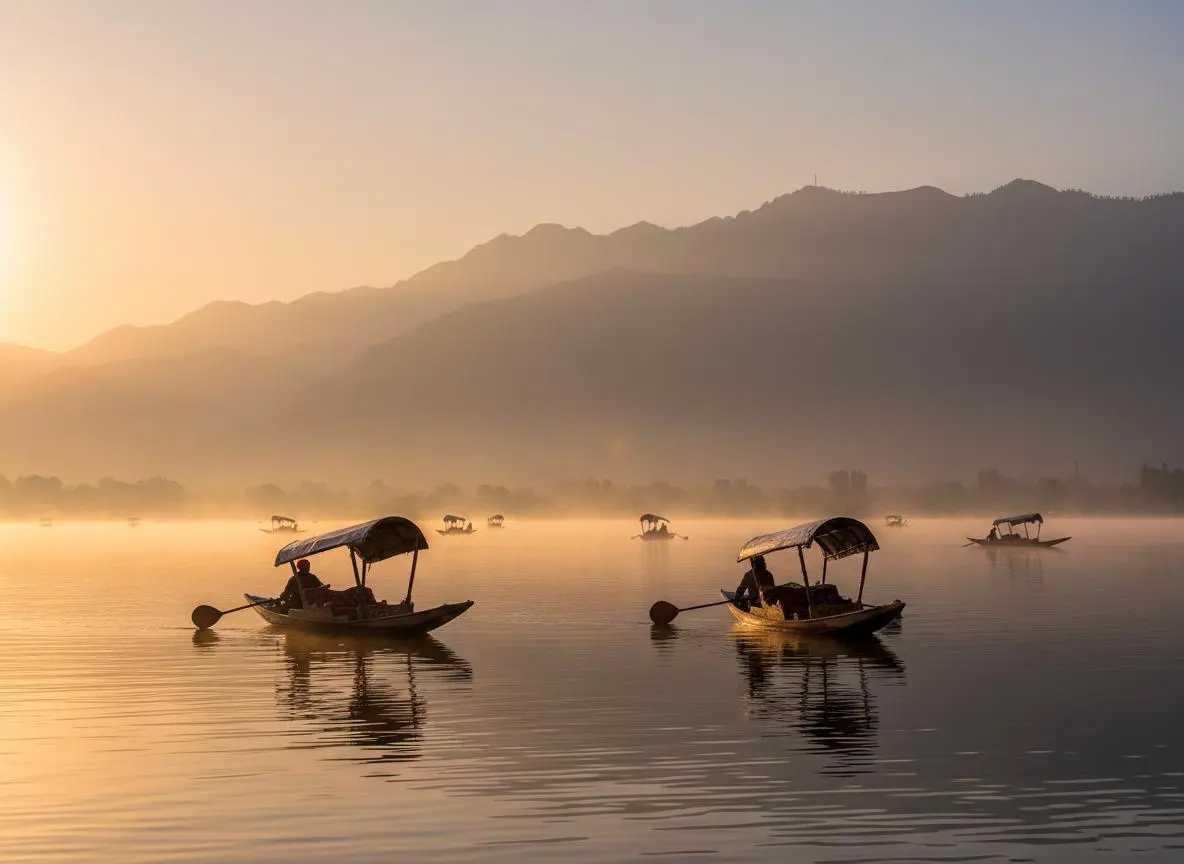
Dal Lake between 10 AM and 4 PM, especially on weekends, is basically a traffic jam of shikaras. A sunrise ride — 6 to 7 AM — gets you the lake at its stillest, with light that’s honestly better for photos anyway. Same logic applies to the Mughal gardens: get there before noon and you’ll have Nishat Bagh and Shalimar Bagh mostly to yourself, or at least not fighting through a tour group for a spot to sit. If you’re staying over the water rather than just visiting for the morning, it’s worth reading up on Dal Lake houseboat stays before you book — timing your check-in around the same quiet windows makes a real difference.
How to Avoid Tourist Crowds in Kashmir Main Hubs: Pahalgam and Sonmarg
Betaab Valley and Baisaran get hit by every tour bus mid-morning onward. Worth knowing before you plan your day: Betaab, Aru Valley, and Chandanwari are only reachable by union taxi from the Pahalgam taxi stand — private cabs, including the one that brought you from Srinagar, aren’t allowed on those roads. It’s a system, not a hassle, but it does mean you’re on the union’s schedule, so getting to the stand early matters more than it would elsewhere. If you’d rather skip the main three entirely, our Pahalgam offbeat trails and hidden viewpoints guide covers where locals actually go instead.
One more Pahalgam-specific factor: if you’re travelling in July or August, the town isn’t just busier from monsoon-season trekkers — it’s peak weeks for the Amarnath Yatra, and the whole Lidder valley runs at near-capacity with pilgrim traffic, security checks, and full hotels. If your trip is leisure rather than pilgrimage, that’s a window worth avoiding on crowd grounds alone, separate from the weather.
Sonmarg works a little differently since it’s usually a long day trip from Srinagar rather than an overnight stop. Leaving early isn’t optional there so much as it’s the only way to actually enjoy Thajiwas Glacier before the pony operators and the rest of the day-trip crowd show up.
How to Avoid Tourist Crowds in Kashmir Main Hubs: Pick Your Season Deliberately
May and June are Kashmir’s busiest, most expensive months — the classic family-holiday window, and everything shows it. Shift your dates and the whole trip changes:
September and October: This is genuinely the sweet spot. Crowds thin out noticeably, the light turns golden, and the Gulmarg queues we mentioned above basically stop being a problem.
July and August: Monsoon season lower down, but it’s also peak trekking season for routes like Tarsar Marsar, and rates drop while crowds do too — outside of the Yatra-driven surge in Pahalgam noted above.
December to March: Don’t mistake this for off-season in Gulmarg — it’s ski season, which means it’s actually peak season there, even if Srinagar and Pahalgam are quiet.
How to Avoid Tourist Crowds in Kashmir Main Hubs: A Few More Things That Just Work
Weekdays over weekends, every time — this alone solves half the crowd problem at any single hub.
Book online wherever it’s possible, not just for the Gondola. It removes you from the queue entirely rather than just making the queue faster.
Carry cash in Gulmarg specifically. ATMs are scarce — the nearest reliable one is in Tangmarg, 13 km away — and that’s its own kind of delay nobody plans for.
For official timings, advisories, and permit updates before you travel, the J&K Tourism site is worth a check.
How to Avoid Tourist Crowds in Kashmir Main Hubs: Or Just Skip the Hubs Sometimes
Honestly, the most reliable way to avoid a crowd is to not be where the crowd is. Doodhpathri, Bangus Valley, and the alpine lake treks beyond the standard circuit give you the same scenery with a fraction of the people. See our guides to a Doodhpathri day trip from Srinagar, Bangus Valley’s camping and trekking routes, and unexplored alpine lakes trekking routes in Kashmir if that sounds more like your trip. For the fuller picture of where else to go instead of the main circuit, our offbeat places in Kashmir guide is the place to start.
How to Avoid Tourist Crowds in Kashmir Main Hubs: Plan It With Travel Nerve Kashmir
We’re a local, Kashmir-based team offering 24/7 support on ground, and honestly, this is just how we plan every itinerary by default — Gondola tickets booked ahead, gardens scheduled for the morning, a buffer day built in wherever weather could mess with Phase 2. It’s not an upgrade you have to ask for. You can see what past guests say about working with us on our Google Business profile.
Tell us your dates and we’ll build the full Kashmir itinerary around avoiding exactly this kind of thing.
🧭 Want a Perfectly Timed, Crowd-Free Kashmir Holiday?
Tell us your dates, and our Srinagar team will design a custom route avoiding peak queues at Gondola, Dal Lake, and Pahalgam.
👉 Why Travellers Trust Travel Nerve Kashmir | Get Instant Quote on WhatsApp
How to Avoid Tourist Crowds in Kashmir Main Hubs: FAQs
What time should I book the Gulmarg Gondola to skip the queue?
Book online through the JKCC’s tatkal window, which opens at 5 PM the day before, or well in advance during peak season. Walk-up queues in December-January and May-June commonly run 2-3 hours.
Is Dal Lake crowded in the morning?
No — it’s calmest between 6 and 8 AM, well before the midday shikara traffic builds up.
What’s the best month to visit Kashmir to avoid crowds?
September and October, hands down. Clear weather, thinning crowds, and none of the peak-season queue problems that show up in summer.
Does Phase 2 of the Gondola close often?
More often than people expect. Wind, fog, or snowstorms can shut it down for several days at a stretch, so it’s worth keeping a backup day if reaching Apharwat Peak matters to your trip.