
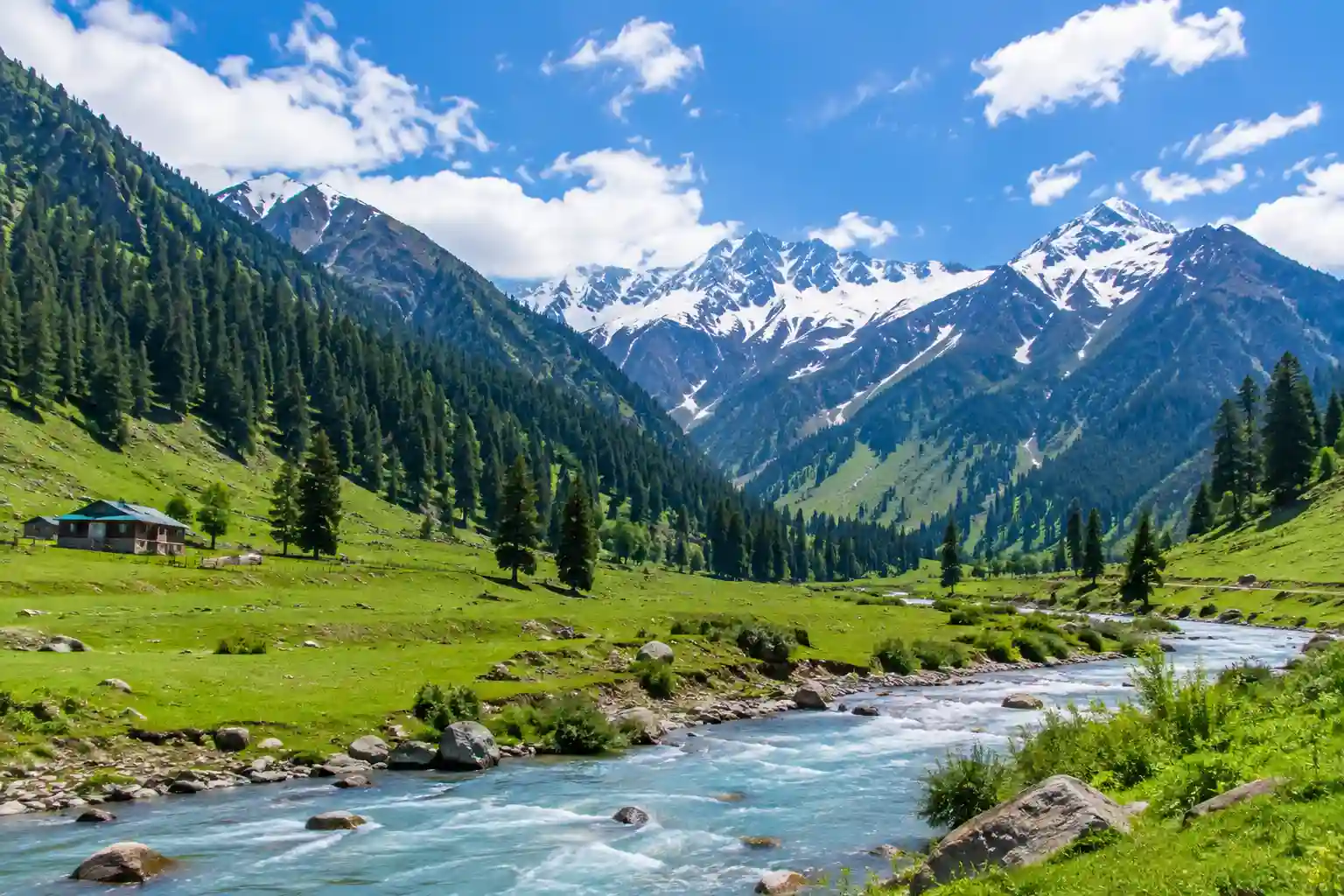
This Bangus Valley camping and trekking guide is for travellers who are done with Gulmarg crowds and Pahalgam traffic jams and actually want to see a Kashmir that most tourists never reach. Bangus Valley sits quietly in the Kupwara district of North Kashmir, roughly 100–130 km from Srinagar, and it remains one of the last true unexplored meadows in the Himalayas — no hotels, no shops, no crowds, just 300 square kilometres of alpine grassland at 10,000 feet.
At Travel Nerve Kashmir, we get asked the same question every season: “Is Bangus Valley worth the effort compared to the usual Kashmir circuit?” The honest answer is yes, but only if you plan the trek and the camp properly. This guide walks you through everything — location, routes, best season, permits, camping logistics, and a packing list — so your Bangus Valley trip is memorable for the right reasons.
Bangus Valley Camping and Trekking Guide: Quick Facts
| Detail | Bangus Valley |
|---|---|
| Location | Kupwara district, North Kashmir (west of Handwara), close to the border |
| Distance from Srinagar | Roughly 100–130 km, depending on route |
| Altitude | About 10,000 ft (3,000 m) |
| Size | Approx. 300 sq km of alpine meadow |
| Two sections | Bod Bangus (Big) and Lokut Bangus (Small) |
| Best time to visit | May to September |
| Trek difficulty | Moderate |
| Where to stay | Camping inside the valley; basic guesthouses in Reshwari and Handwara |
| Mobile network | None inside the valley |
| Permits | Arranged by your registered local guide or operator |
Bangus Valley Camping and Trekking Guide: Location and Why It’s Still Unexplored
Bangus Valley lies west of Handwara town in the Kupwara district of Jammu and Kashmir, tucked inside the Pir Panjal range. The valley is split into two sections — Bod Bangus (Big Bangus), the larger elliptical meadow bowl, and Lokut Bangus (Small Bangus), a quieter, smaller stretch on the north-eastern side. The name is commonly traced to a word for forest (Van) and one for grass (gus), which suits a valley of pine forest and open pasture.
For decades, Bangus stayed off the tourist map because of North Kashmir’s security situation and the lack of road access. Both barriers have eased considerably. The roads have improved, the region is stable, and yet the valley has kept its untouched character — which is exactly why an unexplored camping and trekking guide to Bangus Valley matters right now, before it turns into the next Sonmarg.
If you want the wider picture beyond camping, our Bangus Valley destination guide covers the valley as a whole. Staying in the same district, our Lolab Valley offbeat guide makes a good add-on.
Bangus Valley Camping and Trekking Guide: How to Reach the Valley from Srinagar
Getting to Bangus Valley is part of the adventure, and it’s the first thing this Bangus Valley camping and trekking guide needs to get right, because both approach routes end in a trek, not a drive.
Route 1: Via Kupwara
From Srinagar, drive roughly 85 km to Kupwara town (about 3 hours). From Kupwara, a further 42 km leads towards Bangus, with the last stretch requiring a trek or a 4×4 depending on road and weather conditions.
Route 2: Via Handwara
This is the shorter and more commonly used approach. Drive from Srinagar to Handwara, then continue toward Reshwari village, which is the last motorable point on this side. From Reshwari, you trek or take a 4×4 into the meadow itself.
Either way, expect the final leg into Bangus Valley to be on foot. There are no metalled roads inside the meadow, and that is precisely what keeps it unexplored and undamaged.
Bangus Valley Camping and Trekking Guide: Best Time to Visit
The ideal window for a Bangus Valley camping and trekking trip is May to September. Snow melts off the meadows by late April, and by May the grasslands turn a deep green, dotted with wildflowers.
- May – June: Fresh meadows, flowing streams, cooler daytime temperatures — ideal for first-time trekkers.
- July – August: Lush greenery at its peak, occasional afternoon showers, best for photography.
- September: Clear skies, golden light, fewer insects, and the best stargazing conditions of the year.
Nights stay cold even in peak summer, often dropping to 12°C or lower, so this Bangus Valley camping guide strongly recommends packing for winter nights regardless of the month.
Bangus Valley Camping and Trekking Guide: Routes and Difficulty Level
Most treks into Bangus Valley are graded moderate — manageable for a reasonably fit beginner, but not a casual stroll. Expect river crossings, forest trails, and open meadow walking across 1–2 days depending on your starting point.
Reshwari to Bangus Trek
The most popular entry route, passing through pine forest, small waterfalls, and grazing meadows used by local Gujjar shepherds before opening into the main Bod Bangus bowl.
Lokut Bangus Trail
A shorter, gentler walk from the main valley into the smaller Lokut Bangus meadow — ideal for a half-day exploration once you’ve set up base camp.
Bidrun Top Trek
For trekkers who want elevation and a panoramic reward, the climb to Bidrun Top from the Behak area is a steep but short trek, roughly a kilometre, offering a 360-degree view of the entire Bangus bowl.
Lashar Valley
On the northern side of Bod Bangus, Lashar Valley is another popular trekking objective for those who want to go beyond the main meadow. Ask your guide about current access and conditions before you plan it.
Mobile connectivity does not exist inside the valley. A local guide isn’t optional here — trails aren’t always clearly marked, and a guide also handles checkpoints, permits, and campsite selection.
Looking for more Kashmir treks? See our guides to unexplored alpine lakes trekking routes in Kashmir and Pahalgam’s offbeat valley trails. Bangus also pairs naturally with Gurez Valley and Doodhpathri, or browse the full list of offbeat places in Kashmir.
🌲 Explore Bangus, Gurez & Doodhpathri Offbeat Circuit
Visit pristine, untouched valleys with our dedicated offbeat Kashmir tour packages.
👉 Book 7-Day Kashmir Offbeat Package | Speak to Offbeat Expert
Bangus Valley Camping and Trekking Guide: What to Expect at the Campsite
There is no hotel, guesthouse, or forest rest house inside Bangus Valley. If you want to experience the meadow at sunrise — which is when it looks its absolute best — camping is not optional, it’s the only way.
A proper Bangus Valley camping setup includes dome or alpine tents, sleeping bags rated for near-freezing nights, a separate toilet tent, and a camp cook for fresh meals. Basic guesthouses do exist in Reshwari village and Handwara town for travellers who prefer not to camp, but they miss the entire point of this trip.
Evenings in camp usually mean a bonfire, hot Kashmiri nun chai, and some of the clearest night skies in the Himalayas thanks to zero light pollution. This is the part of any Bangus Valley trekking and camping guide that photographs can’t fully capture — you have to sit under that sky yourself.
Responsible camping is part of any good Bangus Valley camping and trekking guide. The meadows are summer pasture for Gujjar and Bakarwal families, so the huts and livestock you pass are people’s seasonal homes. Keep a respectful distance, camp where your guide advises, and carry every piece of waste back out with you.
Bangus Valley Camping and Trekking Guide: Permits, Safety and Local Guides
Because Bangus Valley sits close to the border in a sensitive district, some sections require checkpoint clearance. A registered local guide or operator handles this on your behalf, along with campsite permissions and route safety. For current advisories and trekking regulations, check the official J&K Tourism website. International visitors should also read our guide for foreign tourists in Kashmir and confirm their trip details with us before booking.
Every Bangus Valley camping and trekking guide worth following will tell you the same thing about altitude: at roughly 10,000 feet, mild symptoms like headache or breathlessness are possible, though the elevation isn’t extreme enough to require acclimatisation days for most healthy trekkers. Solo travel, including for women, is generally considered safe in Bangus when done with a guided group, given the steady security presence in the region.
Bangus Valley Camping and Trekking Guide: Packing List
A well-packed bag makes or breaks a Bangus Valley trek. Here’s what this Bangus Valley camping and trekking guide recommends carrying:
- Warm layers for nights (temperatures can fall to 12°C or lower even in summer)
- Sturdy trekking shoes with good grip for river crossings and forest trails
- Sleeping bag rated for cold weather, if not provided by your operator
- Rain jacket or poncho for sudden afternoon showers
- Power bank — there is no charging point once you leave Reshwari or Handwara
- First-aid basics and any personal medication
- Reusable water bottle and a water purification method
Bangus Valley Camping and Trekking Guide: Book with Travel Nerve Kashmir
Planning an unexplored trek like Bangus Valley on your own means arranging permits, guides, camping gear, and route logistics separately — and getting even one of them wrong can end your trip early. Travel Nerve Kashmir puts all of it together: vetted local guides, full camping equipment, checkpoint coordination, and a route plan built around the season you’re travelling in.
If Bangus Valley is on your list this year, follow this Bangus Valley camping and trekking guide and book before word gets out and it stops being unexplored. Questions before you book? Contact our team or find us on our Google Business Profile.
Explore Bangus Valley’s untouched meadows and pine forests easily with local experts.—you can explore our customized Kashmir holiday packages to craft an itinerary that includes this hidden gem alongside popular stops. If you prefer a seamless, hassle-free journey, head over to our Kashmir tour package booking page to secure your spot. And for those looking to combine the lush tranquility of Bangus with high-altitude mountain adventures, check out our popular best Ladakh 4 Nights 5 Days tour package 2026 to build the ultimate multi-region trip! For current Ladakh travel information, refer to the official Ladakh Tourism website.
Bangus Valley Camping and Trekking Guide: Frequently Asked Questions
Where is Bangus Valley located, and how far is it from Srinagar?
Bangus Valley is in the Kupwara district of North Kashmir, west of Handwara town, roughly 100–130 km from Srinagar depending on your route. The last motorable point on the Handwara side is Reshwari village; the rest is on foot or by 4×4.
Is Bangus Valley good for beginners?
Yes, with a guide. The trek is graded moderate, and most reasonably fit beginners manage it comfortably when paired with an experienced local guide who knows the terrain and pacing.
How many days do I need for a Bangus Valley camping trip?
Most travellers plan 2–3 days: one day to trek in and set up camp, a day to explore Lokut Bangus and Bidrun Top, and a day to trek out.
Is there a hotel or guesthouse inside Bangus Valley?
No. Camping is the only overnight option inside the meadow. Basic guesthouses are available in Reshwari village and Handwara town for travellers who prefer not to camp.
What is the difference between Bod Bangus and Lokut Bangus?
Bod Bangus (Big Bangus) is the larger elliptical meadow bowl. Lokut Bangus (Small Bangus) is a smaller, quieter stretch on the north-eastern side, and a gentler half-day walk once your camp is set up.
Is there mobile network in Bangus Valley?
No. There is no mobile connectivity inside the valley, which is part of what keeps it unexplored. Inform family of your itinerary before you leave Handwara or Kupwara.
What is the best month to visit Bangus Valley?
May and June offer the freshest meadows, while September brings the clearest skies and best stargazing, making both excellent choices depending on what you want from the trip.
Do I need a permit for Bangus Valley?
Certain stretches near checkpoints require clearance due to the valley’s location near the border. A local guide or registered operator handles this as part of the trek arrangement.