
Turtuk & Thang Village: Balti Heritage & Indo-Pak Border Guide (2026)
Most Ladakh itineraries end at Diskit or Hunder, sand dunes and double-humped camels ticked off, bags packed for Leh. Push another two hours past that, and the landscape changes entirely — apricot orchards replace barren rock, stone houses replace monasteries, and you’re suddenly in a village that spent its first few decades of independence as part of Pakistan. Turtuk Village Ladakh is that place, and it’s one of the more genuinely surprising stops anywhere in the region. This guide covers everything you need before visiting Turtuk Village Ladakh: the history, the permits, the road in, and how Thang fits into the picture.
What Is Turtuk and Why Its History Is So Unusual
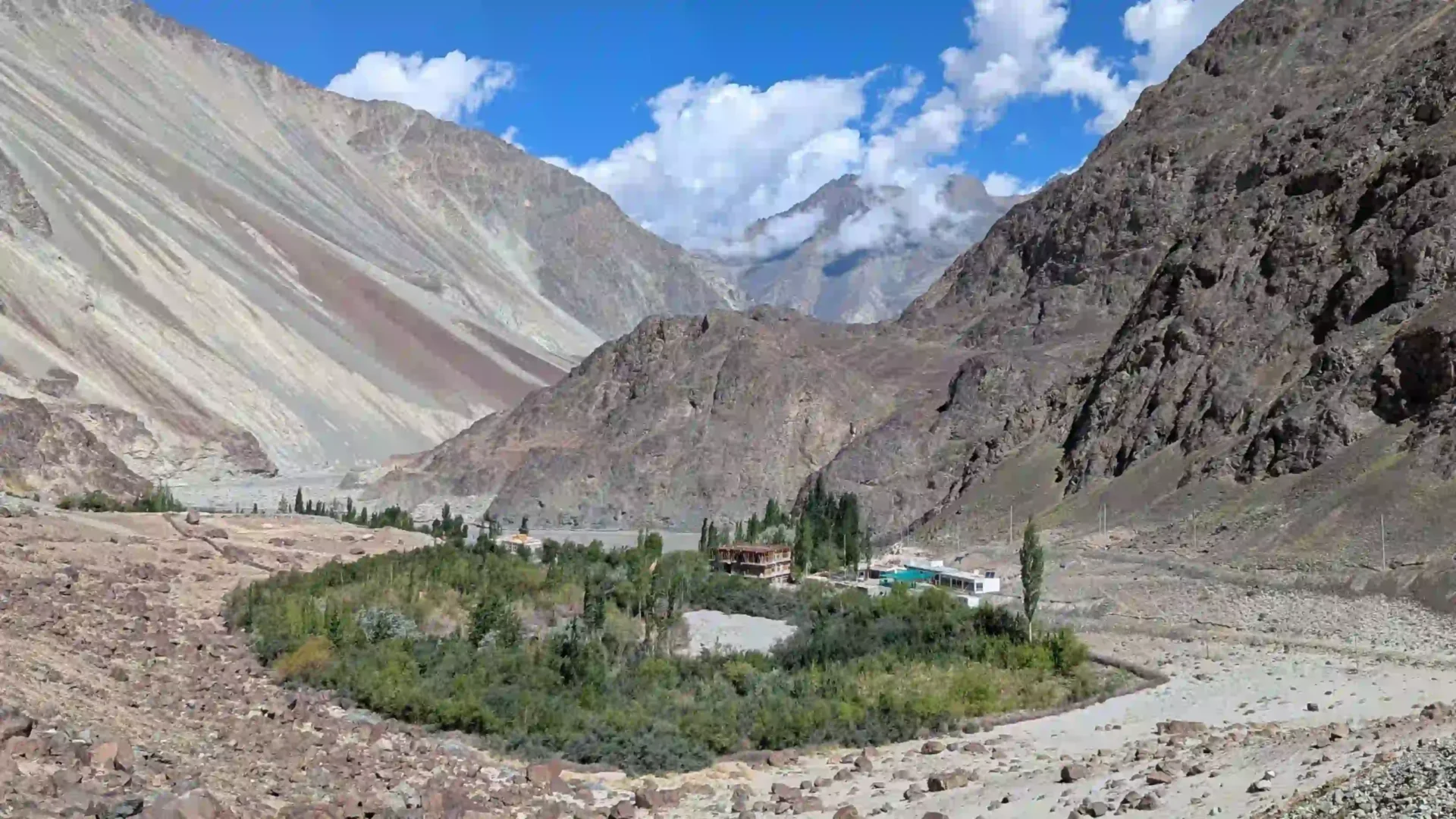
Turtuk sits on the banks of the Shyok River in the Nubra Valley, at an altitude of roughly 3,001 m (9,846 ft) — noticeably lower and gentler than most of Ladakh’s headline destinations, which makes it a genuinely comfortable stop rather than a high-altitude endurance test. Until December 8, 1971, Turtuk was part of Pakistani-administered Baltistan; Indian forces captured it during the Indo-Pak war that year, and it became Indian territory overnight, along with the neighbouring villages of Chalunka, Tyakshi, and Dhothang.
That history shows up everywhere once you’re actually walking through Turtuk Village Ladakh. The population is almost entirely Balti and Muslim, a sharp contrast to the Buddhist-majority culture found across the rest of Ladakh, and the language, architecture, and food all carry a distinctly Baltistani character that simply doesn’t exist anywhere else in Indian territory.
Distance from Leh and How to Reach Turtuk
Reaching Turtuk Village Ladakh takes a full day of driving — it sits roughly 205 km from Leh, and the drive takes about 6 to 9 hours depending on road conditions and how many stops you make along the way. Turtuk Village Ladakh is roughly 205 km from Leh, and the standard route runs Leh → Khardung La Pass → Khalsar → Diskit or Hunder → Turtuk, crossing one of the highest motorable passes in the world before descending through the rest of Nubra Valley.
A few practical notes worth knowing before you set out for Turtuk Village Ladakh:
- Fuel up before Khalsar or Diskit — there’s no petrol available past that point, and Turtuk Village Ladakh itself has no fuel station.
- Roads are paved but narrow and winding, so budget more time than the raw distance suggests, especially if you’re travelling in a larger vehicle.
- No train or direct bus service — Leh is the nearest airport, and most travelers either self-drive, hire a private taxi, or take a bus to Nubra Valley and a local cab onward from there.
Most people combine Turtuk with the rest of a Nubra Valley itinerary rather than visiting it as a standalone trip, given how far it sits from Leh on its own.
Permits Required for Turtuk and Thang
Because Turtuk Village Ladakh sits so close to the Line of Control, permit rules here matter more than almost anywhere else in Ladakh, and they’ve shifted in recent years:
- Indian nationals previously needed a separate Inner Line Permit (ILP) for this stretch; as of 2026, this has largely been folded into the Ladakh Environment and Development Fee (EDF), a single receipt that also covers Nubra Valley, Pangong Tso, and Tso Moriri. Permit and fee structures for border-adjacent zones do change, so it’s worth confirming current requirements before you travel rather than assuming last year’s rules still apply.
- Foreign nationals require a Protected Area Permit (PAP), arranged through a registered operator in advance.
- Carry physical ID and permit copies — checkpoints along the route do check these, particularly given how close Turtuk Village Ladakh sits to the border.
🏡 Experience Balti Culture in Turtuk & India’s Border Edge
We organize seamless border-zone permits, dedicated 4×4 transport across Khardung La, and verified heritage homestays in Turtuk for an unforgettable cultural journey.
👉 Explore Nubra & Turtuk Tour Packages | Customize Your Border Route
Thang Village: India’s Actual Last Village
Turtuk gets called “the last village of India” in most travel writing, but that’s technically not accurate — Thang, about 2 km further along, is the real northernmost point open to tourists. It sits closer to the Line of Control than Turtuk itself, and access here is more sensitive and more tightly regulated, so treat any visit to Thang as something to plan through a local operator rather than attempt independently. Always follow current on-ground guidance and any restrictions in place at the time — this is an active border-adjacent military zone, not simply another viewpoint.
For travelers who do make it there, Thang offers views over the Shyok River valley and, on clear days, a genuine sense of standing at the literal edge of the country — an experience unlike anything else on a standard Ladakh trip.
Things to Do in Turtuk
There’s genuinely more to do in Turtuk Village Ladakh than a quick photo stop suggests:
- Balti Heritage Museum and House — a small but genuinely worthwhile look at the region’s pre-1971 history, traditional Balti dress, and the Baltistani polo kits still preserved locally.
- Turtuk’s mosque at Yul — featuring intricately carved wooden ceilings and pillars dating back to medieval times, one of the more visually striking buildings in the village.
- The old polo ground — Balti polo has been played here for generations, and the ground itself, framed by orchards and the Karakoram mountains behind it, is worth the short walk even without a match on.
- Waterfall trek — a genuinely challenging climb hugging the mountainside up to the source of a local waterfall, roughly 3 hours round trip, with a distant glimpse of K2, the world’s second-highest peak, from the top on a clear day.
- Village walks — wandering the narrow stone-house lanes among poplar and willow trees is, for many visitors, the actual highlight of Turtuk Village Ladakh, more than any single sight.
Balti Culture and Food in Turtuk
Turtuk Village Ladakh serves food unlike anything else you’ll eat elsewhere in the region — Balti cuisine draws on Central Asian and Kashmiri influences, and the apricot orchards that line the village mean fresh apricots, apricot oil, and dried fruit show up in almost everything during the summer season. A handful of small cafés have opened here in recent years, ranging from simple bridge-side eateries serving local staples to more curated spots offering a full Balti tasting menu — a genuine surprise this far from Leh.
Best Time to Visit Turtuk
May to September is the reliable window for visiting Turtuk Village Ladakh, with daytime temperatures ranging comfortably between 10°C and 25°C. Roads through Khardung La and the rest of Nubra Valley stay open and accessible through this period, and the apricot orchards are at their most photogenic from late spring through midsummer.
Where to Stay and Eat Near Turtuk
Turtuk Village Ladakh has developed a genuine tourism base over the past decade — homestays and small guesthouses are the norm, many run by local Balti families, and staying at least one night here rather than rushing through as a day trip from Diskit or Hunder is worth the extra time if your schedule allows it.
Turtuk and Thang Cost Breakdown
A trip to Turtuk Village Ladakh costs more in travel time than money — here’s a realistic budget range:
| Item | Approximate Cost |
|---|---|
| Private taxi from Leh (round trip, via Nubra) | Varies by vehicle and duration |
| Ladakh Environment & Development Fee (Indian nationals) | Single fee, covers Turtuk, Nubra, Pangong, Tso Moriri |
| Protected Area Permit (foreign nationals) | Arranged via registered operator |
| Homestay in Turtuk (per night) | ₹1,000–2,500 including meals |
| Balti Heritage Museum entry | Nominal local fee |
Treat these as planning ranges — border-zone logistics and permit costs shift more often here than in most of Ladakh, so confirm current numbers close to your travel dates.
Why Visit Turtuk Village Ladakh with Travel Nerve Kashmir
Turtuk Village Ladakh isn’t a place to add to an itinerary as an afterthought — the permits, the distance, and the border-zone sensitivity all need proper handling, which is exactly what we manage for guests folding it into a Nubra Valley leg of their trip. If offbeat, culturally distinct corners of Ladakh interest you, Turtuk pairs naturally with some of our other remote picks — see our guides to Tso Moriri Lake & Karzok Village and Zanskar Valley if you’re building a longer, offbeat-focused Ladakh trip.
Before you go, our complete packing list for high-altitude Ladakh trips and Ladakh road trips and high-altitude routes guide are both worth reading before a trip out this far. Our Leh Ladakh Tour Packages page covers itinerary lengths that can include Turtuk, and our Ladakh on a Budget guide shows how to fit a stop like this into a longer trip without overspending. Browse the rest of the region on our destinations page.
Frequently Asked Questions
How far is Turtuk from Leh?
Turtuk is roughly 205 km from Leh. The drive typically takes between 6 to 9 hours by road via Khardung La Pass and the central Nubra Valley (Diskit/Hunder).
Do I need a permit to visit Turtuk?
Yes, permits are required. Indian nationals need the Ladakh Environment and Development Fee (EDF receipt), while foreign nationals require a Protected Area Permit (PAP) arranged via a registered travel operator.
Is Turtuk really the last village of India?
Technically, no. Thang Village, situated about 2.5 km further north along the Line of Control, is India’s northernmost accessible border point for tourists, though Turtuk is the main cultural and residential hub of the region.
What is the best time to visit Turtuk Village Ladakh?
The best time is from May to September. During these months, the mountain passes across Khardung La are clear, temperatures range pleasantly between 10°C and 25°C, and the local apricot orchards are in full bloom.
Is Turtuk safe to visit given its location near the border?
Yes, all tourist-designated zones in Turtuk are completely safe and welcoming. When visiting forward points like Thang Village near the Line of Control, travelers should strictly adhere to army guidelines, stay on marked trails, and carry valid ID proofs.
Plan Your Turtuk and Thang Trip
Ready to add Turtuk Village Ladakh and Thang to your Nubra Valley itinerary? Contact us or message us on WhatsApp with your travel dates, and we’ll sort the permits, the route, and exactly how far toward the border you’ll be able to go.