
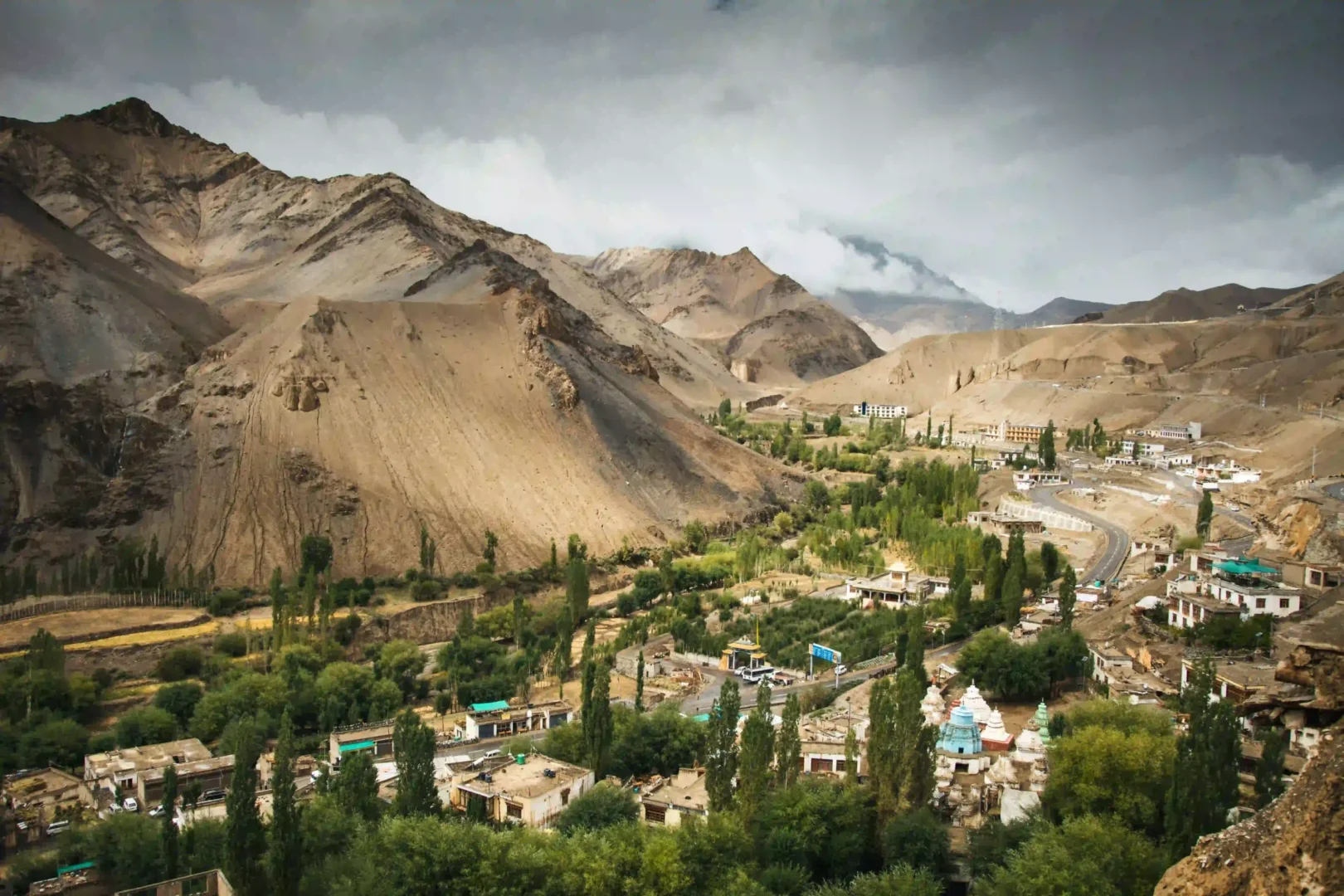
If you’ve done the Srinagar-Leh Highway, you already know this stretch even if you don’t know its name yet. It’s the day you cross Zoji La with your stomach in your throat, stop at a pink sandstone memorial where the mountains themselves feel like they’re holding their breath, and then wake up the next morning in a green valley that looks nothing like the barren Ladakh you were expecting.
Kargil, Dras, and Suru Valley are three different places with three different personalities, but almost everyone experiences them as one continuous stretch of road. As a local travel agency whose drivers cross this stretch regularly, we have laid out this guide town by town, in the order you’ll actually reach them.
Quick Facts on Kargil, Dras and Suru Valley
- Kargil Town: ~204 km from Srinagar, ~220 km from Leh, altitude ~2,676 m (8,780 ft), sitting on the banks of the Suru River.
- Dras: ~60 km from Kargil, altitude ~3,230 m — often called the “Gateway to Ladakh” and famously known as one of the coldest inhabited places on Earth.
- Suru Valley: Begins ~40 km south of town, running about 100 km toward Pensi La.
- Key Pass: Zoji La (3,528 m), the seasonal chokepoint between Kashmir and Ladakh.
- Key Highlights: The Kargil War Memorial, Mulbekh Monastery, Hunderman Village, the Drang-Drung Glacier, and views of the Nun Kun peaks.
The Ultimate Route Breakdown: Stop by Stop
1. Dras: The Gateway to Ladakh
Dras is the first proper stop after crossing Zoji La. It is regularly described as the second-coldest inhabited place on Earth after Siberia, with winter temperatures dropping well below -40°C.
- Kargil War Memorial (Drass War Memorial): Located about 5 km from the town centre on the Srinagar-Leh Highway at the foot of the Tololing Range. Built by the Indian Army to honour soldiers who died during the 1999 Kargil War, it features a pink sandstone memorial wall engraved with names, a museum with recovered weapons, and clear views toward Tiger Hill and Tololing. (Entry is free, though it briefly closes around July 23–26 for Vijay Diwas commemorations).
- Beyond the Memorial: Dras serves as a starting point for shorter walks to upland villages and a base for trekking routes into the Suru Valley. For official travel updates regarding the region’s western approaches, you can refer to the Directorate of Tourism Kashmir.
2. Kargil Town: Where to Slow Down
Kargil is the second-largest town in Ladakh after Leh and sits almost midway on the Srinagar-Leh Highway. Often treated as a rushed fuel stop, it genuinely deserves more time. It is a Muslim-majority town with great local food, a busy market, and India’s largest production of apricots.
- Munshi Aziz Bhat Museum: Housed in a former Silk Route trading post right in town, preserving ledgers, textiles, and artifacts from when Kargil connected Central Asia, Tibet, and the Indian plains.
- Hunderman Village: Part of Pakistan until 1971 and a closed military zone for decades, Hunderman is now open to visitors. The Hunderman Museum of Memories preserves homes and objects left behind when the border shifted, offering a moving look at Partition history.
3. Mulbekh Monastery (En Route to/from Leh)
About 36 km from Kargil town, Mulbekh features a 9-metre (30 ft) Maitreya Buddha statue carved directly into the rock face approximately 800 years ago. It houses two gompas (Serdung Gompa and Rgyalden Gompa) and marks the cultural transition from Kashmir’s Muslim-majority region into Ladakh’s Buddhist belt.
4. Suru Valley: The Green Surprise
Opening up south of Kargil toward Pensi La, Suru Valley provides a striking contrast to Ladakh’s barren terrain with fertile farmland, apple and apricot orchards, and villages fed by the Suru River.
- Nun Kun Massif: Clear days offer unobstructed views of Nun and Kun, twin peaks towering over 7,000 metres.
- Rangdum Monastery: Situated on an isolated rocky outcrop past Panikhar, looking like a medieval fortress amidst total wilderness.
- Pensi La & Drang-Drung Glacier: Pensi La connects Kargil to Zanskar, overlooking the massive Drang-Drung Glacier just below.
Best Time to Visit
- May to September: The prime season when the Srinagar-Leh Highway is open and Suru Valley orchards are thriving. June brings apricot fruits into season.
- Zoji La Status: Traditionally open from late March/April through November. BRO winter maintenance and the Zojila Tunnel project continue to improve connectivity, but always check current road status before traveling in spring or late autumn.
Permits and Restrictions
Indian nationals do not require an Inner Line Permit for the main Srinagar-Leh Highway through Kargil and Dras. Certain border-adjacent areas or deep Suru Valley offshoots may require local verification. Foreign nationals should check current Protected Area Permit requirements before travelling. For official notifications and structured guidelines, you can consult the Tourism Department of UT Ladakh.
Where to Stay
- Kargil Town: Offers the widest range of mid-range hotels and guesthouses for an overnight highway stop.
- Suru Valley: Features local homestays in villages like Panikhar and Sankoo for a more immersive cultural experience.
Frequently Asked Questions
Can I visit Kargil, Dras, and Suru Valley in one day?
You can drive through Dras and reach Kargil town in a single day from Srinagar (7–8 hours), but exploring the Suru Valley requires at least an additional full day, especially if you plan to visit Panikhar, view the Nun Kun peaks, or continue toward Rangdum.
Is the Kargil War Memorial worth the stop?
Yes. Located directly on the Srinagar-Leh Highway in Dras at the foot of Tololing, it is widely considered one of the most poignant and moving landmarks on the route, featuring engraved memorial walls, a museum of wartime artifacts, and direct views of historic battlegrounds like Tiger Hill.
Do I need a permit for Suru Valley?
Domestic Indian travelers do not require an Inner Line Permit for the lower Suru Valley up to Panikhar. However, travel further towards Rangdum, Pensi La, or Zanskar may require permits, and international travelers require Protected Area Permits (PAP). Check local regulations before departing Kargil.
When does the Srinagar-Leh Highway open in 2026?
The highway typically opens between late March and early May depending on snow clearance across Zoji La, and closes by November. While seasonal variations occur, always verify real-time road conditions and BRO advisories before traveling.
Where should I stay overnight Kargil or Dras?
Kargil is the recommended overnight stop. It offers a much wider range of hotels, restaurants, ATMs, and essential services compared to the limited guesthouses in Dras, and serves as the direct junction for routes leading into the Suru and Zanskar valleys.
Final Thoughts
Kargil, Dras and Suru Valley don’t usually get top billing on a Ladakh itinerary — Pangong and Nubra tend to take that spotlight — but this stretch is where the trip actually starts to feel real, from the weight of the war memorial to the surprise of genuine green farmland in the middle of the high Himalayas. If you’re planning the drive, our Ladakh road trips guide covers how this fits into the wider route, and our Leh Ladakh tour packages can handle the logistics if you’d rather not plan it stop by stop yourself.