
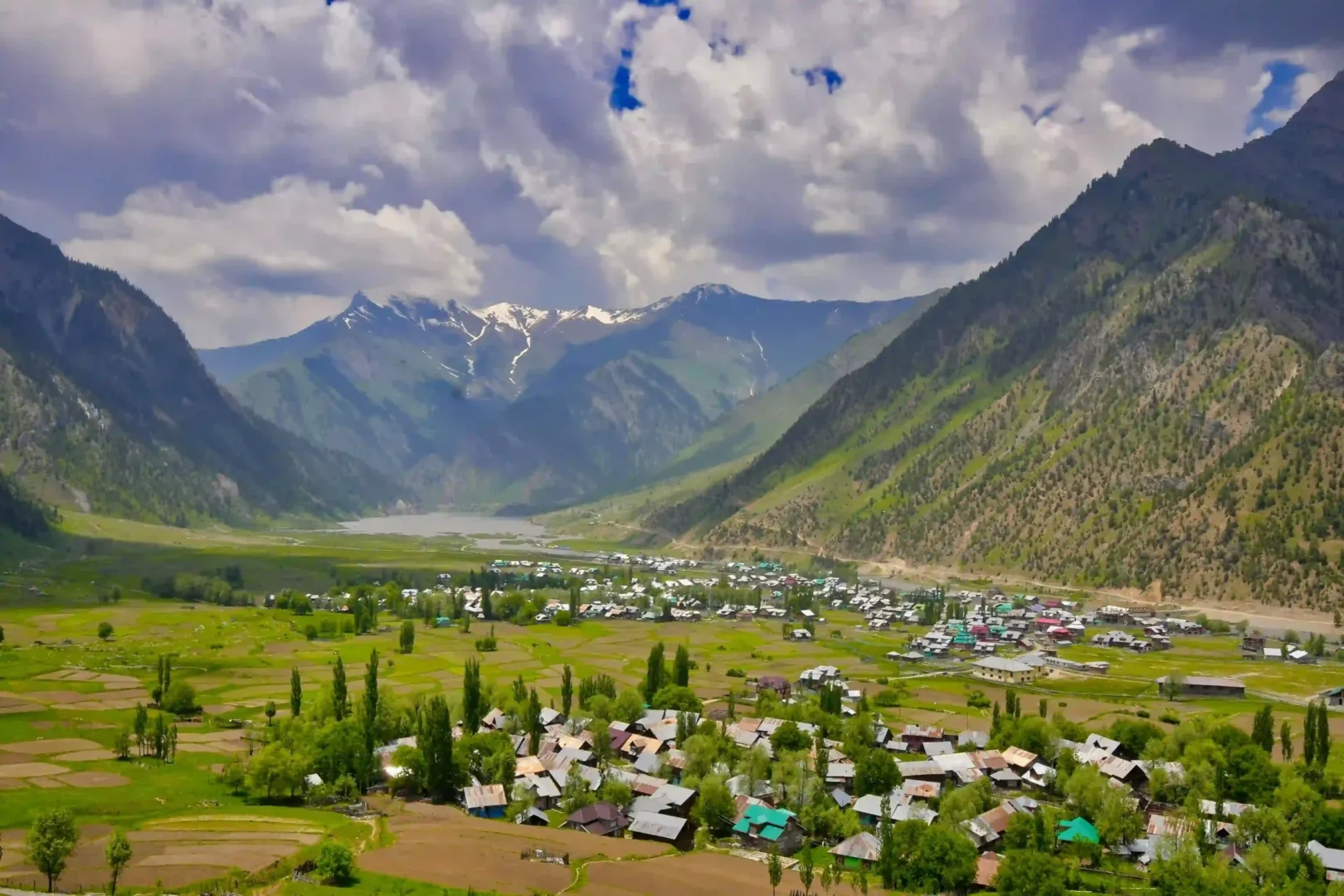
Gurez Valley is the kind of place that shows up on every “offbeat Kashmir” list and still manages to stay genuinely quiet. Tucked into Bandipora district in North Kashmir, hard against the Line of Control, it’s a high valley along the Kishanganga River where wooden villages sit under a pyramid-shaped peak locals named after a 16th-century queen. Getting there takes real effort — a rough mountain pass, a full day of driving, and (depending on who you ask) a permit. This guide covers all of it honestly: how to actually reach Gurez Valley, what the permit situation looks like right now, when to go, and what you’ll actually find once you’re there.
Where Is Gurez Valley and How High Is It?
Gurez Valley sits in Bandipora district, North Kashmir, roughly 125–130 km from Srinagar, though the drive takes far longer than that distance suggests. It runs along the Kishanganga River — the same river that continues into Keran Valley further downstream before crossing into Pakistan-administered territory as the Neelum. Dawar, the valley’s main town, sits at an elevation of about 2,400 metres (roughly 8,000 feet).
A quick fact sheet before you plan around it:
- District: Bandipora, North Kashmir
- Main town: Dawar
- Elevation: Approximately 2,400 m (8,000 ft)
- River: Kishanganga
- Distance from Srinagar: Roughly 125–130 km
- Route: Srinagar → Bandipora → Razdan Pass → Dawar
- Travel time: 6 to 8 hours one way by road
- Local community: Dard-Shina people, with a distinct language and culture
- Season: Open by road roughly May to October; winter access is extremely limited
Permits — What the Situation Actually Is
This is where a lot of online guides either contradict each other or quietly go out of date, so it’s worth being upfront about it. Because Gurez sits close to the Line of Control, it falls into a category where documentation requirements have shifted over time and different sources online currently disagree on the details — some describe a formal Inner Line Permit process through the Bandipora District Commissioner’s office, others describe it as ID-only for Indian nationals with permits mainly relevant for foreign travelers.
“Carry a valid photo ID for every traveler, as checkpoints along the Razdan Pass verify them. Foreign nationals face a more involved process, and restrictions beyond Bandipora have increased. Because these rules change quickly, confirm requirements close to your travel dates rather than relying on outdated blogs. When you book with us, we check current requirements before your trip and handle any paperwork directly. For booking help, use our Kashmir tour package booking page, and see our top 30 Kashmir travel FAQs for other common planning questions.
How to Reach Gurez Valley
The route runs Srinagar → Bandipora → Razdan Pass → Dawar. The first stretch to Bandipora, via Shadipora and along the edge of Wular Lake, covers about 60–65 km on a reasonably good road and takes 2 to 3 hours. From Bandipora, the road climbs over Razdan Pass before descending into the valley toward Dawar — this second stretch is where the real time goes, on narrower, rougher terrain, bringing total travel time to 6 to 8 hours despite the modest total distance.
A sturdy 4×4 or high-clearance SUV with a driver who knows the route is strongly recommended over a standard sedan. Shared sumo services do run from Srinagar and Bandipora for budget travelers, but expect a long, bumpy day with vehicle changes. Fuel up in Bandipora — options thin out considerably beyond it — and carry cash, since ATMs and card facilities inside Gurez Valley are limited. In a normal winter, snow on Razdan Pass shuts the road for months, although in dry winters it has stayed open on most days. We have not been able to confirm a regular tourist helicopter service, so do not plan a trip around one.
Best Time to Visit Gurez Valley
May to October is the window that works — the road stays open, the valley is at its greenest, and the Kishanganga runs full alongside the terraced fields around Dawar. Within that window, June through September tends to be the most reliable stretch for road conditions. Winter brings heavy snowfall — locals have described drifts of 10 to 15 feet in the valley — and the region becomes largely cut off from road access between November and March.
For a fuller month-by-month breakdown of exactly what to expect in each season, see our detailed guide to the best time to visit Gurez Valley. If you are weighing a trip after October, our guide to Gurez Valley in winter shows how often the road has stayed open in recent years and what to do when it is shut. If you want snow without the road risk, see our Kashmir winter tour packages, Pahalgam in winter and Sonamarg in winter, or compare months in our month-by-month guide to winter in Kashmir and our Chillai Kalan guide.
Habba Khatoon Peak
The pyramid-shaped mountain that dominates every photo of Gurez is Habba Khatoon Peak, named after a 16th-century Kashmiri poetess and queen whose verses are still sung across the valley. Local legend holds that she wandered these hills composing poetry after being separated from her husband, Yusuf Shah Chak, and the peak has carried her name ever since. It’s less a hike than a striking backdrop — most visitors photograph it from Dawar itself, though the base does offer walking routes for travelers who want a closer look.
Wildlife and Nature in Gurez Valley
Gurez sits within a wider protected landscape that’s home to genuinely rare wildlife — the Hangul, or Kashmiri stag, alongside the Himalayan brown bear, snow leopard, and musk deer, plus a strong range of Himalayan bird species for anyone travelling with binoculars. Most visitors won’t spot the rarer species on a short trip, but the valley’s isolation is exactly why they’re still here, and it’s part of what separates Gurez from the more heavily-touristed parts of Kashmir.
Things to Do in Gurez Valley
Village walks in Dawar: Traditional wooden architecture and a genuinely different pace of life from the rest of the valley.
Riverside time along the Kishanganga: Much like at Keran further downstream, simply sitting by the river is a large part of the appeal here.
Photography: Habba Khatoon Peak, wooden villages, and terraced fields make this one of the more visually distinct corners of Kashmir.
Trekking and camping: The surrounding high-altitude terrain offers genuine trekking routes for well-prepared travelers, best arranged with a local guide given the remoteness. Beyond Dawar, travelers with extra time sometimes push on into Tulail Valley, a further, even quieter extension of the same Kishanganga corridor — worth asking your operator about if you want to go deeper than the standard Gurez trip. For another high-country camping option, see our Bangus Valley camping and trekking guide.
Cultural conversation: The Dard-Shina community has a strong tradition of hospitality, and a few words of local greeting go a long way here, much as they do in Keran.
Facilities and Safety
Accommodation in Gurez Valley is modest by design — government-run tourist lodges and local homestays cover most of what’s available, rather than hotels in the conventional sense. Restaurants and shops are limited to what Dawar itself offers, so this isn’t a trip to plan around convenience.
The area is generally considered safe for visitors under normal conditions, with a visible security presence given its location near the Line of Control. As with any border-adjacent destination, conditions and access can shift, so check current advisories on the J&K Tourism website close to your travel dates rather than relying on older information.
Combine Gurez Valley with Other North Kashmir Destinations
Gurez sits in the same general North Kashmir corridor as a few other places worth folding into the same trip. Wular Lake, one of Asia’s largest freshwater lakes, sits right along the Bandipora route on the way in, making it a natural stop rather than a detour. Further along the same Kishanganga river system, Keran Valley offers a similar border-adjacent, unhurried experience and is worth comparing against Gurez if you’re deciding between the two.
Lolab Valley rounds out the North Kashmir offbeat trio, sharing similar terrain and pace. If you’re weighing Gurez against Kashmir’s other big offbeat draw further south, see our Gurez Valley vs Doodhpathri comparison, our Doodhpathri guide, or browse the full Gurez, Doodhpathri & Aharbal hidden gems circuit. If you want Gurez built into one itinerary with Bangus Valley and Doodhpathri, our 6 nights 7 days Kashmir offbeat package covers all three. For more ideas beyond the usual circuit, see our guide to offbeat places in Kashmir and our Ultimate Kashmir Travel Guide 2026.
If permits are on your mind for other parts of a longer trip, our guide to Srinagar to Leh road trip and permit details covers the same general topic for a different region entirely. And if the whole point of a trip like this is escaping the main tourist circuit, see our piece on how to avoid tourist crowds in Kashmir’s main hubs. If you are adding the Gulmarg and Pahalgam side of Kashmir to the same holiday, our Gulmarg guide is the place to start.
Why Visit Gurez Valley with a Local Operator
Gurez isn’t a destination we’d recommend figuring out entirely solo, particularly given how often the documentation requirements shift and how much the 6–8 hour drive depends on knowing current road conditions past Bandipora. A route that was fine last month can be genuinely rough after a landslide or early snow, and permit rules are exactly the kind of thing that changes without much notice.
We’re based in Srinagar, and we fold Gurez Valley into fully customized Kashmir holiday packages for travelers who want this specific experience alongside the rest of their trip. Our piece on what actually makes a difference in a local tour operator explains why current, route-specific knowledge matters more here than it does on the standard Gulmarg–Pahalgam circuit. You can also see what past travelers say about trips like this on our Google profile.cal 4×4 mountain cabs, homestays in Dawar, and route permissions for a hassle-free trip to Habba Khatoon Peak.
👉 Customize Your Itinerary | 💬 Chat on WhatsApp (+91-8492085895)
Frequently Asked Questions
Do I need a permit to visit Gurez Valley?
Requirements have shifted over time and sources online currently disagree on the details. Carry valid photo ID for every traveler regardless, and confirm current requirements close to your travel dates — when you book with us, we check this and handle any paperwork directly.
How do I reach Gurez Valley from Srinagar?
The route runs Srinagar → Bandipora → Razdan Pass → Dawar, covering roughly 125–130 km and taking 6 to 8 hours by road, due to the rough terrain beyond Bandipora rather than the distance itself.
What is the best time to visit Gurez Valley?
May to October, once the Razdan Pass is clear of snow. June through September tends to offer the most reliable road conditions.
Is Gurez Valley safe to visit?
The area is generally considered safe under normal conditions, with a visible security presence given its location near the Line of Control. As with any border-adjacent destination, it’s worth checking current advisories before you travel.
What is Habba Khatoon Peak?
A pyramid-shaped mountain overlooking Dawar, named after a 16th-century Kashmiri poetess and queen. It’s the most photographed landmark in Gurez Valley.
Can foreign nationals visit Gurez Valley?
Access for foreign travelers has become more restricted in recent years, and requirements can change. Confirm current rules well ahead of travel rather than assuming an older guide is still accurate.
Want to add Gurez Valley to your Kashmir itinerary? Get in touch and we’ll handle the permits, the route, and the stay — or browse our full range of Kashmir tour packages to see how it fits into a longer trip.