
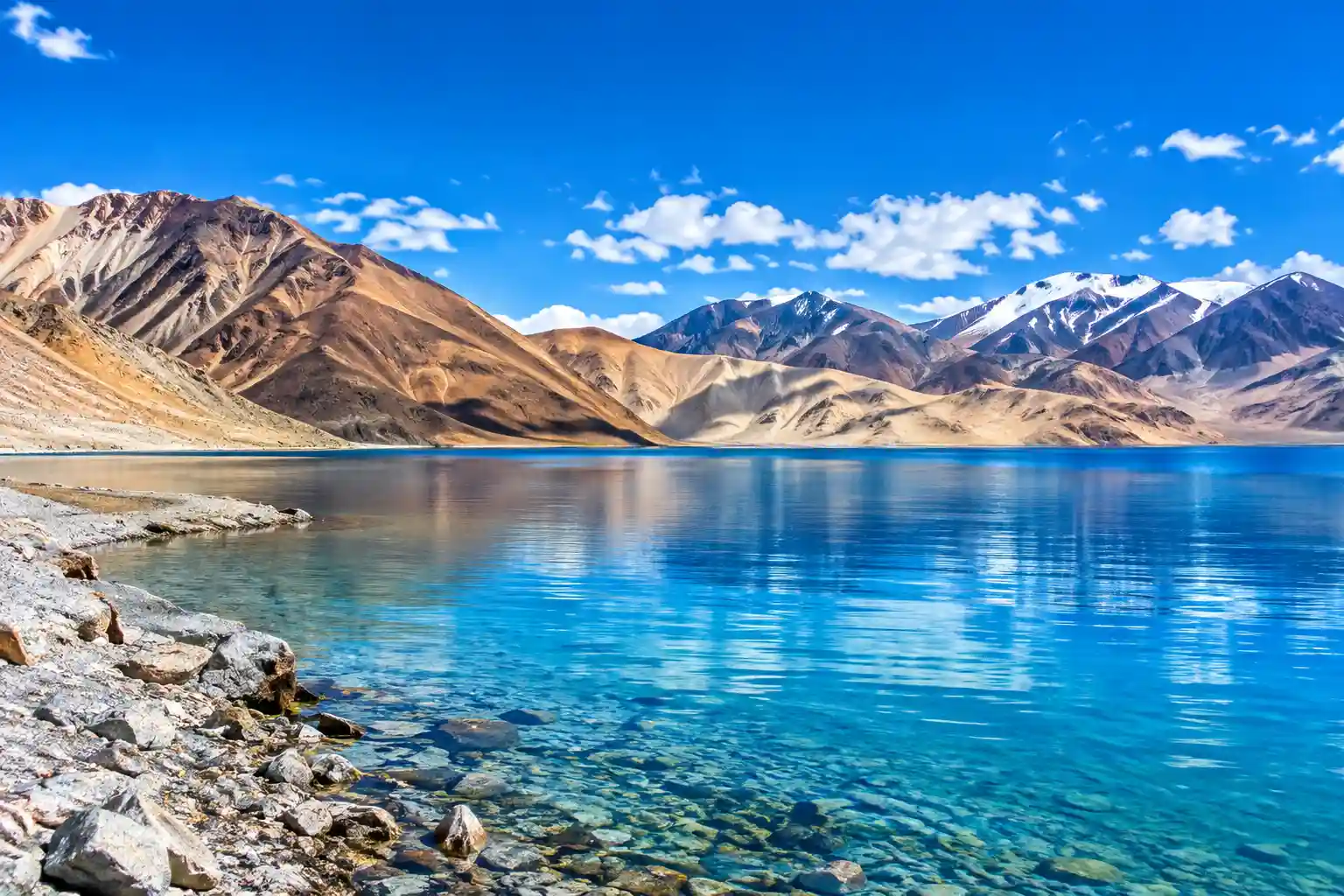
If you’re piecing together a Ladakh trip from ten different blogs, three government notices, and a WhatsApp forward about road conditions, you’re not alone — Ladakh is one of the most rewarding places in India to visit, and also one of the most disorganized to research. We’re Travel Nerve Kashmir, and our drivers and guides run this route regularly, from the Srinagar side and the Manali side both. This is our complete Ladakh travel guide for 2026 — where to go, when to go, what permits you actually need, and how the pieces fit together into a trip that doesn’t waste your limited days at altitude.
What This Ladakh Travel Guide Covers
Use the sections below in order, or jump straight to whichever part you need — best time to go, permits, where to stay, and our full range of Ladakh tour packages are all covered here.
Why Visit Ladakh
Ladakh sits high in the Trans-Himalaya, carved out as its own Union Territory in 2019, and it looks like almost nowhere else in India — stark mountain deserts, glacial rivers, Buddhist monasteries perched on cliffs, and lakes that shift colour through the day. It’s a very different trip from the green valleys of Kashmir: higher, drier, harder on the body, and slower by design. Most first-time visitors underestimate how much altitude changes the pace of a trip here, which is really the whole reason this Ladakh travel guide exists.
Best Time to Visit Ladakh
The main travel season runs roughly late May to late September, when the high passes are open and temperatures are manageable. June to August is peak season and also when most of the interior — Pangong, Nubra, Tso Moriri — is fully accessible. September brings thinner crowds and crisp, clear skies, and is a favourite among photographers. That’s the seasonal window the rest of this Ladakh travel guide is built around. Winter (November to February) is a completely different trip, with roads to most of the region closed and only Leh town itself realistically reachable, mostly for the Chadar Trek crowd rather than general travellers.
Permits: What You Actually Need
Permits are the part of any Ladakh travel guide that goes out of date fastest, which is exactly why this section points you elsewhere for the specifics rather than listing numbers here. This is the part that trips people up most, because the rules differ for domestic and foreign travellers, and for different parts of the region.
In short: Leh town itself needs no special permit for Indian citizens, but several of the most-visited spots — Nubra Valley, Pangong Lake, Tso Moriri, Khardung La beyond a certain point — fall inside Inner Line Permit (ILP) territory, and foreign nationals face an additional layer of restricted-area rules on top of that. Rather than list numbers here that change from season to season, our dedicated Ladakh permits for foreign nationals guide walks through exactly who needs what, and you can cross-check current requirements directly with Ladakh Tourism, the region’s official tourism authority.
How to Reach Ladakh
There are two overland routes into Ladakh worth knowing about in this Ladakh travel guide, plus flights.
Srinagar–Leh Highway (NH-1): The route we know best, running through Sonamarg, over Zoji La, past Dras and Kargil, and on to Leh. It’s the more dramatic and, in our experience, the more comfortable of the two overland routes, with better-paced acclimatization stops along the way. Our Srinagar to Leh road trip and permit details guide breaks down the full route.
Manali–Leh Highway: Higher, more remote, and considerably rougher on both vehicle and body, crossing several passes above 4,500m in quick succession. It’s spectacular, but not the easier option it’s sometimes made out to be.
By air: Flying into Leh is the fastest way in, though it removes the gradual acclimatization that the road trip naturally builds in — something worth thinking about seriously before you book, since altitude sickness is a real risk when you skip straight to 3,500m. Whichever route you take, this Ladakh travel guide recommends building in at least a day of rest before pushing on to Nubra or Pangong.
For the bigger picture on driving in, our Ladakh road trips and high-altitude routes overview covers how the major routes connect.
Top Places to Visit in Ladakh
Here’s where most itineraries in this Ladakh travel guide start, roughly in the order they’re usually visited.
Pangong Lake — the vast, colour-shifting lake that everyone’s seen a photo of, stretching from India into Tibet. Read more in our guide to Pangong Lake.
Nubra Valley — sand dunes, double-humped Bactrian camels, and monasteries, reached by crossing Khardung La. Our Nubra Valley guide covers the route and what to expect.
Khardung La — long billed as one of the world’s highest motorable passes, and still one of the most memorable drives in the region. Full details in our Khardung La guide.
Tso Moriri — quieter and less-visited than Pangong, with a genuinely remote, untouched feel. See our Tso Moriri Lake guide for access details.
Zanskar Valley — one of the more demanding, more remote corners of Ladakh, best suited to travellers with extra days to spare. Our Zanskar Valley guide has the specifics.
Turtuk Village — a Balti village near the Line of Control that only opened to tourists in 2010, with a character unlike anywhere else in Ladakh. More in our Turtuk Village guide.
Kargil, Dras & Suru Valley — the towns and valleys you pass through on the Srinagar–Leh highway, worth more than a fuel stop if you have the time. Our Kargil, Dras and Suru Valley itinerary covers the region properly.
Dras War Memorial — a moving stop on the highway itself, honouring the soldiers of the 1999 Kargil conflict. Timings, entry details, and everything else are in our Dras War Memorial guide.
Suggested Itineraries
How long you need depends heavily on where you’re starting from and how much of the interior you want to see. This Ladakh travel guide’s rough rule of thumb: 5–6 days covers Leh, Nubra, and Pangong at a reasonable pace; 7–8 days lets you add Tso Moriri or a proper Kargil–Dras stretch without rushing; 10 days or more starts to make Zanskar realistic. If budget is the main constraint rather than time, our Ladakh on a budget: complete 10-day plan lays out a realistic route without cutting corners on acclimatization.
Packing for High Altitude
Ladakh’s dry cold and thin air catch a lot of travellers off guard, even in peak summer — nights can drop close to freezing at altitude even when Leh town is pleasant during the day. Rather than repeat a partial list here, our complete packing list for high-altitude Ladakh trips covers layering, altitude-sickness essentials, and the gear people most often forget — one more reason a proper Ladakh travel guide beats packing from memory.
Ladakh Tour Packages
If you’d rather have the route, permits, and acclimatization schedule planned and driven for you — the whole point of a good Ladakh travel guide — this is where our packages come in:
Our Leh Ladakh Tour Packages page is the starting point for the full range. For a shorter trip, the Ladakh 4 Nights 5 Days and Ladakh 5 Nights 6 Days packages cover Leh, Nubra, and Pangong at a workable pace, while the 7 Nights 8 Days Ladakh Tour Package adds room for Tso Moriri or a slower circuit.
Travelling with family or friends? Our Leh Ladakh Group Trip Package Cost page breaks down per-person pricing. If comfort is the priority, the Leh Ladakh Luxury Tour Package covers the 5-star version of the route.
🚙 Let Us Handle the Logistics
Permits, altitude pacing, and route timing are where most self-planned Ladakh trips go wrong. We handle all three.
👉 Explore Ladakh Packages | Request a Custom Itinerary
Combining Ladakh with Kashmir
A lot of travellers pair the two regions into one longer trip — Kashmir’s valleys and lakes on one end, Ladakh’s high-altitude landscapes on the other, connected by the Srinagar–Leh highway. If that’s the plan, our Kashmir–Leh–Ladakh Tour Package builds both into a single properly paced itinerary, and our Ultimate Kashmir Travel Guide 2026 covers the Kashmir side of the trip in the same depth as this Ladakh travel guide covers Ladakh itself.
Ladakh Travel Guide: Frequently Asked Questions
Do I need a permit to visit Ladakh?
Leh town itself doesn’t require a permit for Indian citizens, but Nubra, Pangong, Tso Moriri, and other border-adjacent areas fall under Inner Line Permit rules, with additional requirements for foreign nationals — as this Ladakh travel guide’s permits section covers above. See our permits guide for specifics.
What’s the best time to visit Ladakh?
June to September, with July–August as the fullest-access peak season and September offering clearer skies and fewer crowds.
Is the Srinagar–Leh route or Manali–Leh route better?
The Srinagar–Leh highway is generally considered the more comfortable and better-paced option for acclimatization; Manali–Leh is more remote and physically demanding.
How many days do I need in Ladakh?
5–6 days for a Leh–Nubra–Pangong loop, 7–8 days to add Tso Moriri, and 10+ days if Zanskar is on your list — see the itineraries section of this Ladakh travel guide above for the full breakdown.
Planning a Ladakh trip and want it built around your dates rather than a generic Ladakh travel guide template? You can see our past trips and read traveller reviews on our Google Business Profile, or reach out and we’ll put together a route that actually fits.ach out and we’ll put together a route that actually fits.