
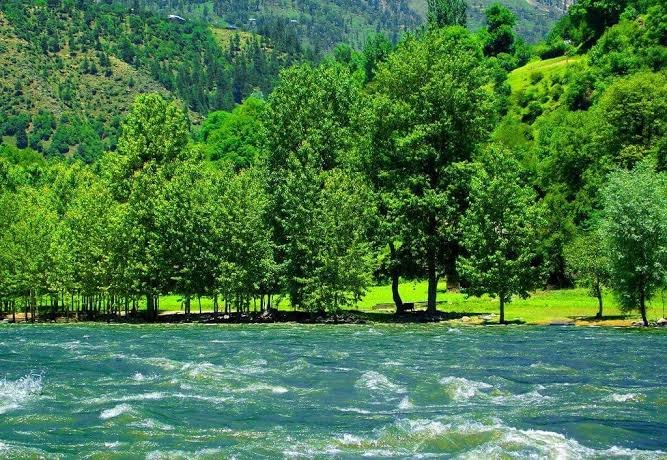
Most people who ask us about Keran Valley have already done Gulmarg, already done Pahalgam, and are looking for something Kashmir doesn’t hand out easily. Keran isn’t a place you stumble into — it’s a small, quiet settlement in the Kupwara district of North Kashmir, sitting right on the Kishanganga River along the Line of Control, and getting there takes a deliberate decision, a permit, and most of a day on the road.
What you get in return isn’t a famous viewpoint or a checklist of attractions. It’s the strange, quiet experience of standing on one riverbank and watching ordinary village life carry on across the water, in another country entirely — and it’s exactly why Keran Valley has become one of the trips our repeat travellers ask about most.
At Travel Nerve Kashmir, we treat this destination as a genuinely different kind of trip from the rest of our itineraries — not harder to enjoy, just different in what it asks of you and what it gives back. This guide covers the permit process, how to actually get there, when to go, and what a realistic day (or two) in Keran looks like.
Where Is Keran Valley Located?
Keran Valley sits in the Kupwara district of North Kashmir, close to the Line of Control, on the banks of the Kishanganga River — a river that continues across the border under a different name, the Neelum, once it enters Pakistan-administered territory. It’s one of those small geographic facts that says a lot about the place: same water, two names, one river.
A quick fact sheet before you plan around it:
- District: Kupwara, North Kashmir
- Elevation: Roughly 1,500–1,600 metres (about 5,000 feet)
- River: Kishanganga (known as the Neelum on the other side of the LoC)
- Distance from Srinagar: Approximately 140–145 km
- Route: Srinagar → Handwara → Kupwara → Mandian → Keran
- Travel time: 5 to 6 hours one way by road
- Local language: Shina, a Dardic language distinct from Kashmiri — most residents also speak Kashmiri and Urdu
Permits and Documentation — What You Actually Need
This is the part that separates Keran Valley from almost everywhere else in our destination lineup, so it’s worth reading closely before you plan your dates.
A permit is mandatory to enter the valley, and it’s typically arranged at Kupwara before the final leg of the journey. Every traveller in your group needs their own valid photo ID — a government-issued photo ID card is the standard and most widely accepted document. Along the route you’ll pass through several checkpoints (travellers commonly report somewhere between 7 and 9), and at each one you may be asked to produce your permit, so it genuinely helps to carry multiple physical copies rather than relying on a single document or a phone screenshot.
Foreign nationals face a separate and more involved process — the standard police permit that works for domestic travellers isn’t sufficient, and eligibility needs to be verified through official channels well in advance of travel. Drone photography is also prohibited throughout the area for security reasons, so leave it at home rather than risk it being confiscated at a checkpoint.
One honest note: permits and access are subject to current security conditions, and this can change with little notice. Whenever you’re finalising your travel dates, it’s worth checking current local advisories rather than assuming last season’s conditions still apply. When you book with us, our team handles the permit paperwork directly, so you’re not the one navigating this from a hotel room in Srinagar the night before.
How to Reach Keran Valley from Srinagar
The full route runs Srinagar → Handwara → Kupwara → Mandian → Keran, covering roughly 140 to 145 km and taking 5 to 6 hours by road. The first stretch to Kupwara, via Sopore and Handwara, is on a well-maintained road and comfortable in a private vehicle. From Kupwara, the second leg to Keran runs through Mandian on a narrower mountain road, and this is also where your permit gets processed before the final approach.
Given the distance and the permit stop, this isn’t a trip you want to squeeze into a rushed day. A private taxi from Srinagar is by far the most comfortable way to do it — shared sumo services do run via Kupwara and Mandian for budget travellers, but they involve multiple vehicle changes and add real time to an already long day.
Distance to Keran Valley Kashmir from Nearby Towns
Srinagar is the usual starting point, but a lot of travellers are actually coming from somewhere else in North Kashmir first. Here’s how Keran Valley Kashmir sits relative to the towns people most often ask about:
| From | Distance | Notes |
| Srinagar | ~140 km | Main route, 5–6 hours |
| Sopore | ~80 km | First major town on the Srinagar–Kupwara road |
| Handwara | ~60 km | Via Kupwara |
| Kupwara | ~47 km | Last town before the checkpoint stretch and permit stop |
| Anantnag | ~195 km | No direct route — see note below |
| Pahalgam | ~230 km | Same note below applies |
Anantnag and Pahalgam sit south of Srinagar, while Keran Valley Kashmir sits north of it — so getting from one to the other means backtracking through Srinagar rather than a direct road existing between them. If you’re coming from South Kashmir, it’s worth treating Keran Valley Kashmir and a South Kashmir stop like Pahalgam as two separate legs of a trip rather than one continuous route.
Best Time to Visit Keran Valley
May to October is the window that works best for a Keran trip — roads stay clear, checkpoints operate normally, and you get the valley at its greenest, with the Kishanganga running full alongside terraced fields on the surrounding slopes. Winter brings heavy snowfall to this part of North Kashmir, and road access can become unreliable or close entirely, so it’s not a season we’d recommend planning around unless you have a lot of built-in flexibility and are prepared for the trip to fall through.
Given how far Keran is from Srinagar, an overnight stay makes far more sense than attempting the round trip in a single day — you’ll spend most of a day just travelling if you try to do it there and back, leaving very little actual time in the valley itself.
Things to Do in Keran Valley
Keran isn’t built around a checklist of attractions, and that’s honestly the point. Here’s what fills the time once you’re there:
- Evening village walks: Wander through Keran’s terraced fields and traditional wooden architecture with a local guide — this is where the valley’s character actually comes through.
- Riverside time: Simply sitting along the Kishanganga, watching daily life continue on the opposite bank, is the experience most visitors remember longest.
- Fishing: The river supports recreational fishing for travellers interested in spending an unhurried afternoon by the water.
- Camping and star gazing: With minimal light pollution and clear mountain skies, an overnight camp here delivers genuinely dark, star-filled nights.
- Cultural conversation: The local Dardic, Shina-speaking community has a strong tradition of hospitality — even a few words of greeting in Shina tend to open doors that a Kashmiri or Hindi greeting won’t.
- Photography: Between the terraced farmland, wooden village architecture, and the river gorge itself, this offbeat corner of North Kashmir offers a very different visual character from the rest of the tourist circuit.
Most travellers find one to two days sufficient to properly experience Keran Valley, especially with an overnight stay factored in.
A Realistic Two-Day Keran Valley Itinerary
If you’re wondering how this actually fits together, here’s roughly how a two-day trip plays out for most of our guests:
- Day 1: Depart Srinagar early morning, drive to Kupwara via Sopore and Handwara, stop for permit processing, continue through Mandian to Keran. Settle into your guesthouse or camp by late afternoon, then take an evening riverside walk as the light softens.
- Day 2: Morning by the Kishanganga — fishing, photography, or simply sitting with the view. A short village walk with a local guide before starting the return drive to Srinagar, arriving by evening.
It’s a full two days once you account for the road time, but it’s the pace that makes Keran feel worth the distance rather than rushed.
Facilities and Safety
Tourist infrastructure here is genuinely limited, by design as much as by remoteness — this is a border settlement first and a tourist destination second. Guesthouses and camping setups exist for overnight stays, and a Primary Health Centre operates locally for basic medical needs. Beyond that, don’t expect much in the way of restaurants, shops, or the kind of tourist amenities you’d find in Pahalgam or Gulmarg.
The area is generally considered safe for visitors under normal conditions, with a visible security presence and monitoring throughout — the checkpoints that can feel like friction on the way in are also part of what keeps the area secure day to day. That said, given the sensitivity of the location, conditions can shift, and it’s worth checking current advisories close to your travel dates rather than relying on older information.
Tourist infrastructure here is genuinely limited, by design as much as by remoteness — this is a border settlement first and a tourist destination second.
Where to Stay in Keran Valley
Accommodation options in Keran are limited compared with destinations like Gulmarg or Pahalgam. One stay option for travellers visiting the valley is Keran Resort. Because accommodation choices are limited in this remote area, it is advisable to plan and confirm your stay before beginning the journey from Srinagar, especially during the main travel season.
Cash and ATM Availability
Carry sufficient cash before travelling towards Keran Valley. ATMs are available in Kupwara, but after Kupwara there are no ATMs on the route towards Keran Valley. Travellers should therefore withdraw enough cash before continuing beyond Kupwara and avoid depending entirely on ATM access or online payments once they enter the more remote part of the journey.
Mobile Network and Internet
Mobile network connectivity is available in Keran for calls. Based on our local experience, Airtel, Jio and BSNL networks are available for making phone calls in the area. However, internet access is restricted, so travellers should not rely on mobile data or internet connectivity while staying in Keran Valley.
If you need to download important documents, complete online work, make bookings or save maps and travel information, it is best to do so before reaching Keran Valley.
Guesthouses and camping setups exist for overnight stays, and a Primary Health Centre operates locally for basic medical needs. Beyond that, don’t expect much in the way of restaurants, shops, or the kind of tourist amenities you’d find in Pahalgam or Gulmarg.
The area is generally considered safe for visitors under normal conditions, with a visible security presence and monitoring throughout — the checkpoints that can feel like friction on the way in are also part of what keeps the area secure day to day. That said, given the sensitivity of the location, conditions can shift, and it’s worth checking current advisories close to your travel dates rather than relying on older information.
Keran Valley Cost Breakdown
Here’s a realistic sense of what a Keran Valley trip costs to plan around:
| Item | Approximate Cost |
| Permit | fee |
| Private taxi from Srinagar (round trip) | ₹6,400 |
| Guesthouse / homestay (per night) | ₹5,700 |
| Camping setup (per night) | ₹7,000 |
Treat these as a planning range — permit and accommodation costs can shift, so it’s worth confirming current rates when you book.
Combine Keran Valley with Other North Kashmir Destinations
Keran Valley sits in the same general North Kashmir region as several of our other offbeat picks, and travellers who make the effort to get this far out tend to want more than one stop.
Lolab Valley is one of the more natural pairings, sharing similar terrain and a similarly unhurried pace. Gurez Valley is another border destination along the same Kishanganga river system, worth comparing against Keran Valley if you’re deciding between the two for a single trip.
If permits and paperwork are already on your mind, our guide to the Srinagar to Leh road trip and permit details covers the same general topic for a completely different part of the region. And for a wider look at why offbeat places like this are worth the extra travel time, see our piece on how to avoid tourist crowds in Kashmir’s main hubs.
Why Visit Keran Valley with a Local Operator
Keran Valley is not a destination we’d recommend figuring out solo, and we say that as people who genuinely encourage independent travel across most of Kashmir. The permit process, the checkpoint documentation, and the timing of the Kupwara–Mandian leg all benefit from a team that’s done this route before and knows exactly what each checkpoint expects. You can also visit our tour packages page for all the tours that we cover in Kashmir and Ladakh.
Because we’re based in Rafiabad, Srinagar, our operations team handles the permit paperwork directly rather than leaving you to navigate it on arrival. We fold Keran Valley into our Customized Kashmir Holiday Packages for travellers who want this specific experience alongside the rest of their Kashmir itinerary.
Our piece on Local Tour Operator in Srinagar explains why a Srinagar-based team makes a real difference on routes like this one. You’re welcome to check our standing directly on our Google Business Profile or Bing Maps listing before you book.on WhatsApp — Keran Valley trips start from 12,200 INR per person as part of our Customized Kashmir Holiday Packages.
Plan Your Border Trip to Keran Valley
Let our Srinagar-based operations team handle your mandatory Kupwara border permits, private mountain 4×4 transport, and pre-verified riverside homestay arrangements.
Frequently Asked Questions
Do I need a permit to visit Keran Valley?
Yes. A permit is mandatory and is typically arranged at Kupwara before the final leg of the journey. Every traveller needs valid photo ID, with an Aadhaar card being the standard document accepted at checkpoints.
How far is Keran Valley from Srinagar?
Keran Valley is approximately 140–145 km from Srinagar, and the drive takes around 5 to 6 hours via Handwara, Kupwara, and Mandian.
What is the best time to visit Keran?
May to October is the recommended window, when roads stay accessible and checkpoints operate normally. Winter brings heavy snowfall and can disrupt or close access entirely.
Is Keran safe to visit?
Under normal conditions, yes — the area has a visible security presence and is generally considered safe for domestic visitors. Access and conditions can change based on current security advisories, so it’s worth checking closer to your travel dates.
Can foreign nationals visit Keran?
Foreign nationals require a separate, more involved permission process beyond the standard police permit used by domestic travellers. This needs to be verified through official channels well ahead of your trip.
How many days do I need for Keran?
Most travellers find one to two days sufficient, ideally with an overnight stay, since the distance from Srinagar makes a same-day round trip impractical.
Ready to add Keran Valley to your Kashmir itinerary? Explore our Kashmir Offbeat Tour Package, browse all our destinations, or get in touch and we’ll handle the permits and build the route around your dates.