
For a full rundown of what Pahalgam itself is like before you commit to a route, see our Pahalgam Kashmir travel guide.
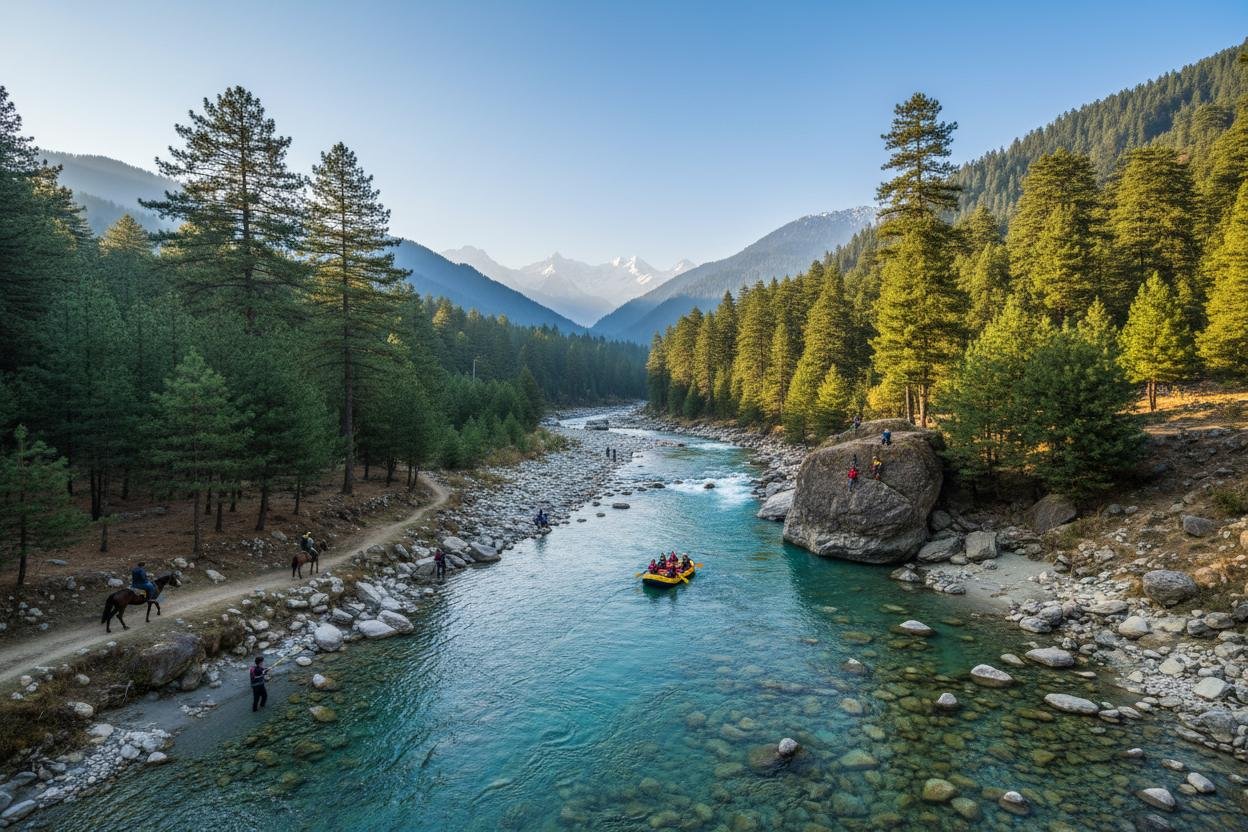
Everyone who’s done even a little research shows up in Pahalgam knowing about Betaab Valley. What most people don’t know is that once you get past it, there’s a whole network of Pahalgam offbeat valley trails and hidden viewpoints that most tour buses never touch — not because they’re hard to reach, but because nobody tells visitors they exist.
We plan trips through this region constantly at Travel Nerve Kashmir, and honestly, the offbeat stuff is what people remember years later, not the crowded meadow everyone photographs. Here’s where it actually is, what it takes to get there, and a few things we’d want to know before going ourselves. And if you’d like to see what else the region hides beyond Pahalgam, our roundup of offbeat places in Kashmir is a good next stop.
Pahalgam Offbeat Valley Trails and Hidden Viewpoints: Start With Aru, Not Baisaran
Aru Valley sits about 12 km from Pahalgam, and it’s genuinely a different world from the main town — quieter, greener, and the actual starting point for most of the region’s serious trekking, including the Kolahoi Glacier and Tarsar-Marsar routes. One thing worth knowing before you go: Srinagar-registered taxis aren’t allowed past a certain point. You’ll need a local Pahalgam union taxi, which costs somewhere around ₹1,000 to ₹1,500 round trip, and honestly, that’s part of what keeps the crowds out.
Pahalgam Offbeat Valley Trails and Hidden Viewpoints: Green Top, If You Only Have a Day
If Aru is as far as your schedule allows, don’t leave without doing the walk to Green Top. It’s a short trek, doable in half a day, and it gives you a proper elevated view over the whole Aru bowl from around 3,300 meters. You’ll almost certainly pass a shepherd or two grazing sheep along the way — it’s that kind of trail, still genuinely used by locals rather than built for tourists.
Pahalgam Offbeat Valley Trails and Hidden Viewpoints: Lidderwat, For When You Have More Time
Lidderwat is roughly 8 km further from Aru, through pine forest and river meadow, and it’s where the trip stops feeling like sightseeing and starts feeling like an actual trek. It’s also where streams from the Tarsar, Marsar and Kolahoi glaciers meet to form the Lidder River, which is where the place gets its name. Most people take two days to do it properly and camp there overnight. A guide is genuinely worth it here — the trail isn’t dangerous, but it’s not always obvious either, and a local guide knows the good camping spots along the way.
Pahalgam Offbeat Valley Trails and Hidden Viewpoints: Satlanjan, the One Almost Nobody Mentions
Satlanjan sits en route to Kolahoi Glacier, and it’s one of those meadows that barely shows up in standard Pahalgam content at all. Wildflowers, streams, mountain views on every side — it’s a genuinely quiet stop for trekkers heading toward Kolahoi who want somewhere to pause that isn’t already full of other people doing the same thing. Most Kolahoi itineraries end at safe viewpoints rather than on the ice itself, since the glacier is no place to go without technical gear and experience.
Pahalgam Offbeat Valley Trails and Hidden Viewpoints: Overa-Aru Wildlife Sanctuary
Most visitors don’t realise Aru Valley sits right on the edge of a wildlife sanctuary — Overa-Aru, protected since 1981 and covering roughly 511 square kilometers — home to musk deer, the occasional Himalayan brown bear, the endangered hangul, and — for birdwatchers specifically — the Himalayan Monal, one of the more striking pheasants you’ll find anywhere in the Himalayas. It’s not a big detour to add a slow morning here if wildlife or birdwatching interests you at all.
Pahalgam Offbeat Valley Trails and Hidden Viewpoints: A Quieter Kind of Activity — Trout Fishing
The Lidder River running through Aru Valley has a healthy trout population, and fishing here is a genuinely peaceful way to spend a few hours if trekking isn’t really your thing. It’s not something we see mentioned often, but it’s one of the more relaxed ways to actually sit with the landscape instead of just walking through it. Check permit requirements before you go so you’re not caught out on the riverbank.
Pahalgam Offbeat Valley Trails and Hidden Viewpoints: When to Go
May to October is the reliable window for most of these trails — Aru Valley is under snow through winter and genuinely inaccessible by December. Late September into October brings clearer skies and noticeably fewer people than peak summer, if quiet is what you’re after.
Pahalgam Offbeat Valley Trails and Hidden Viewpoints: A Few Honest Planning Notes
- Book a union taxi at the Pahalgam taxi stand — you can’t drive your own or a Srinagar-based cab past a certain point.
- A guide is worth the cost for anything beyond Aru itself, especially Lidderwat and Satlanjan.
- Carry warm layers even in summer; nights and early mornings at this altitude drop faster than you’d expect.
- Avoid the trip during heavy monsoon weeks — the route can see landslides.
- Access rules and permits can change, so check the latest guidance on the Jammu & Kashmir Tourism website before you travel.
Pahalgam Offbeat Valley Trails and Hidden Viewpoints: Where This Fits Into a Bigger Trip
If Kolahoi and the alpine lakes further out sound interesting, our guide to unexplored alpine lakes trekking routes in Kashmir covers what’s beyond Satlanjan for trekkers with more time. And if you’re timing this trip to also dodge the crowds elsewhere in Kashmir, our guide on avoiding tourist crowds in Kashmir’s main hubs is worth a read before you fix your dates. For the standard Pahalgam stop within a wider circuit, see our Srinagar Gulmarg Pahalgam tour package guide, or our Kashmir tour package booking guide to see how this fits into different package formats. If you’re still shaping the bigger picture, our complete Kashmir travel guide for 2026 ties the whole region together.
Pahalgam Offbeat Valley Trails and Hidden Viewpoints: Plan It With Travel Nerve Kashmir
We’re a local, Kashmir-based team offering 24/7 support on ground, and this is genuinely one of our favourite itineraries to build — swapping the standard Betaab Valley stop for Aru, Green Top, and a slower pace that actually lets people take the place in. You can browse our ready-made Pahalgam tour packages as a starting point, or see what past travelers say in our Google Business Profile reviews.
Tell us how much time you have and how much walking you’re up for, and we’ll put together a route around it.
Pahalgam Offbeat Valley Trails and Hidden Viewpoints: FAQs
Is Aru Valley better than Betaab Valley?
They’re different experiences — Betaab is easier to reach and more built up, while Aru is quieter, greener, and the actual starting point for the region’s real trekking routes.
Do I need a guide to visit Aru Valley?
Not for Aru itself, but if you’re continuing to Lidderwat or Satlanjan, a local guide is genuinely worth it for both the route-finding and knowing where to camp.
Can I take my own car into Aru Valley?
No. Beyond a certain point, only local Pahalgam union taxis or ponies are permitted — Srinagar-registered taxis aren’t allowed on this stretch.
What’s the best time of year for these trails?
May to October. Aru Valley is under heavy snow through winter, and late September into October offers the clearest skies with the fewest people.