
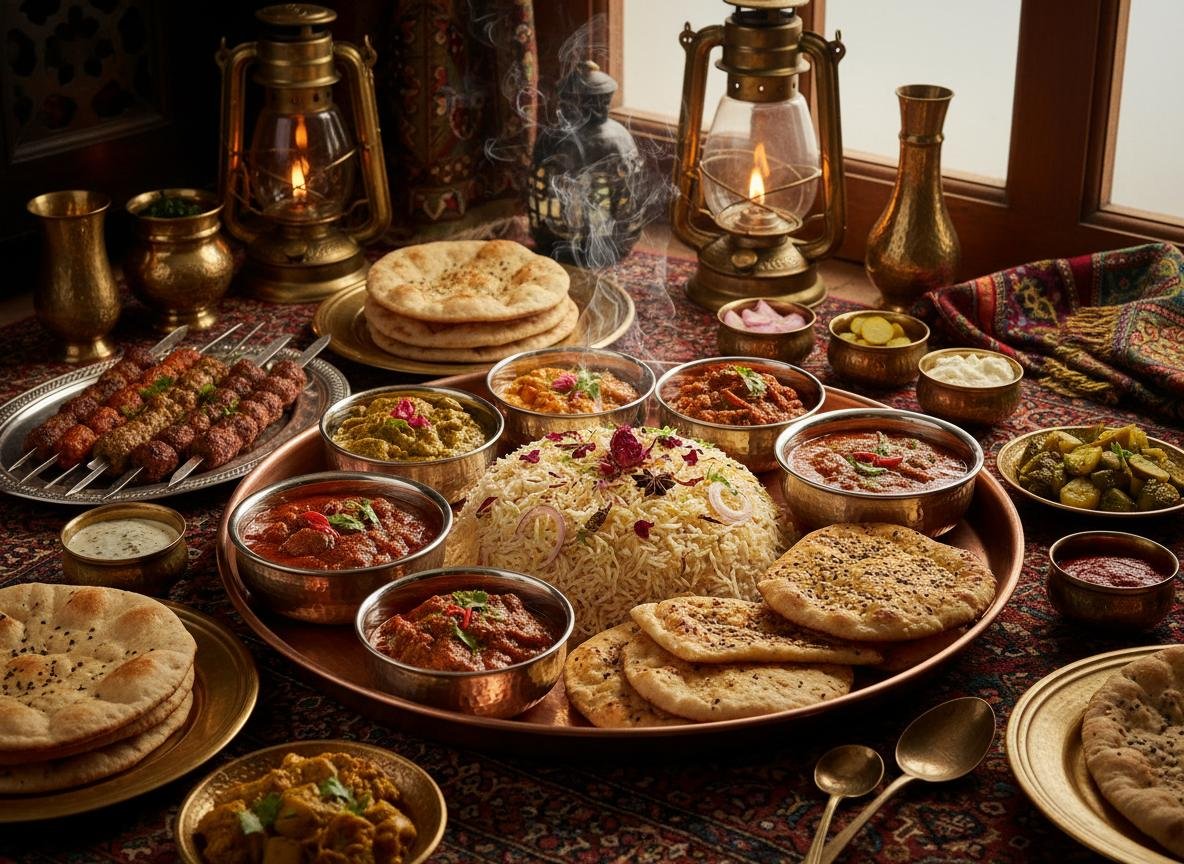
Kashmir cuisine is one of India’s most distinctive food traditions. It grew out of centuries of Persian and Central Asian trade, a cold Himalayan climate and a deep local habit of hospitality. Saffron from the fields of Pampore (Pampore saffron earned a GI tag in 2020), fennel, dried ginger powder and whole warming spices come together in a style of cooking you will not find anywhere else in the country.
Whether you are planning a foodie trip through the valley or simply want to know what to order, this guide to Kashmir cuisine covers it all: the royal Wazwan feast, everyday home food, sweets, teas, winter specials and the practical things that foreign visitors ask us most. If you would rather have Wazwan dinners and local food stops built into your trip from the start, our customized Kashmir holiday packages and Kashmir tour package booking page are good places to begin, and our Kashmir travel FAQs guide covers the planning basics that go with it.
Kashmir Cuisine at a Glance: 15 Dishes Worth Trying
Here is a quick list of the 15 dishes this guide covers, so you can see how wide Kashmir cuisine really is before we go into detail.
| Dish | What it is | Best for |
|---|---|---|
| Rogan Josh | Lamb in a deep red chilli and spice gravy | Meat lovers |
| Gushtaba | Soft minced mutton balls in yogurt gravy | Wazwan finale |
| Rista | Pounded meatballs in a red saffron-chilli gravy | Rich, mild heat |
| Tabak Maaz | Lamb ribs simmered, then fried in ghee | Crispy, savoury bite |
| Daniwal Korma | Mutton curry with fresh coriander and yogurt | Herbal flavour |
| Dum Aloo | Baby potatoes in a yogurt and ginger gravy | Vegetarians |
| Nadru Yakhni | Lotus stem in a mild yogurt broth | Light, unusual dish |
| Haakh | Leafy greens cooked in mustard oil | Everyday home food |
| Muji Gaad | Fish with radish | Winter meals |
| Chaman | Fried paneer in tomato or spinach gravy | Vegetarians |
| Modur Pulao | Sweet saffron rice with dry fruits | Festive taste |
| Phirni | Cardamom rice pudding | Dessert |
| Kahwa | Saffron and almond green tea | Cold evenings |
| Noon Chai | Salty pink tea | Mornings |
| Sheer Chai with Tsot | Pink tea with crusty local bread | Local breakfast |
What Makes Kashmir Cuisine Different From the Rest of India
Kashmir cuisine splits broadly into two traditions. Kashmiri Pandit cooking avoids onion and garlic and leans on asafoetida (hing), fennel and yogurt for depth. Kashmiri Muslim cooking is richer in meat and forms the backbone of Wazwan. Both traditions share a love of mustard oil as the main cooking fat, dried Kashmiri red chillies used for colour more than heat, and whole spices such as cardamom, cloves and fennel used generously through a meal.
Rice is the staple starch of the valley, and a meal in Kashmir cuisine is rarely complete without a cup of tea, either the sweet, saffron-laced Kahwa or the salty pink Noon Chai.
Compared with the rest of India, Kashmir cuisine stands out in three ways. The food is less oily and less fiery than most people expect. There is very little use of tomato and onion in the traditional recipes, so the gravies get their body from yogurt, dried spices and slow cooking. And dry fruits, especially almonds and walnuts, show up in dishes, teas and desserts alike.
Where Kashmir Cuisine Comes From
Local stories say the first Wazas (master cooks) came to the valley with the Central Asian conqueror Timur in the 14th century, bringing the cooking styles of Samarkand with them. Whatever the exact history, Persian and Central Asian influence is easy to taste in Kashmir cuisine today. The tea ritual, the love of dried fruit, the heavy use of saffron and the copper serving ware all point towards the old Silk Road.
Cold winters shaped Kashmir cuisine too. For months the valley was cut off by snow, so families learned to dry vegetables, fish and herbs in autumn and cook with them through winter. That habit still lives on in dishes like Hokh Syun (sun-dried vegetables) and in the many slow-cooked, warming meals you will find on winter menus.
What Is Wazwan? The Heart of Kashmir Cuisine
Wazwan is the traditional multi-course feast at the heart of Kashmir cuisine. It is prepared by a Waza, a master chef trained in the tradition, and served at weddings and major celebrations. A full ceremonial Wazwan can run to as many as 36 courses, though modern versions are usually shorter. Guests sit in groups of four around a large copper platter called a trami and share it, with dishes brought in a set order. For the full story, read our guide on what is Wazwan.
Before the meal, a helper walks round with a basin and a jug of warm water so each guest can wash their hands. Eating is done with your hands, from the shared trami, and it is polite to take from your own side. It is a communal, ritual way of eating that shows what Kashmir cuisine is really about: hospitality. Several of the best-known dishes of Kashmir cuisine, including Rogan Josh, Gushtaba, Rista and Tabak Maaz, are Wazwan staples.
The Royal Feast: Iconic Wazwan Delicacies
Rogan Josh is the crown jewel of Kashmiri non-vegetarian cooking. Tender lamb chunks are slow-cooked in a rich red gravy flavoured with Kashmiri chillies and aromatic spices. It gets its colour and warmth without too much heat, which is why it suits visitors who do not like very spicy food.
Gushtaba is often served as the grand finale of a Wazwan meal. These are velvety minced mutton balls simmered in a creamy, yogurt-based gravy with gentle spices. The meat is pounded for a long time until it turns soft and smooth.
Rista is another pounded meatball dish, cooked in a bright red gravy flavoured with saffron and chilli. The texture is firm but tender, and the gravy has a deeper, spicier taste than Gushtaba.
Tabak Maaz is made from lamb ribs simmered first in milk and spices, then fried in ghee until crisp outside and tender inside. Many travellers say this is the Kashmir cuisine dish they remember longest.
Daniwal Korma is a mutton curry built on fresh coriander leaves (daniwal) and yogurt. It has a fresh, herbal smell and is a favourite of Kashmir cuisine for people who like lighter gravies.
🍲 Taste Authentic Kashmiri Wazwan on Your Holiday. We arrange authentic Kashmiri dining experiences, traditional Wazwan meals and local Kahwa tastings across all custom tours.
👉 View Family Packages with Meals 💬 Get a Custom Foodie Tour
Everyday Kashmiri Food: Comforting Curries and Vegetarian Dishes
Meat dominates royal feasts, but the everyday cooking in most Pandit and vegetarian homes is just as central to the region’s identity. Vegetarians do very well with Kashmir cuisine, as long as you say so clearly when you order.
Kashmiri Dum Aloo uses whole baby potatoes, fried and then slow-cooked in a yogurt gravy thickened with ginger powder and fennel. Traditional Pandit-style Dum Aloo leaves out onion and garlic entirely.
Nadru Yakhni is made from lotus stems (nadru), sliced and simmered in a delicate yogurt broth with dried mint and cardamom. Lotus grows in the lakes around Srinagar, so this dish is as local as it gets.
Haakh is a leafy green, close to collard greens, cooked simply with mustard oil, green chillies and salt. It sits beside almost every traditional meal and tastes like real home cooking.
Muji Gaad pairs fish (gaad) with radish (muji), cooked with pungent spices and sometimes lotus stems. It is traditionally a winter dish.
Chaman is Kashmiri paneer. The blocks are fried and then cooked either in a red tomato gravy or in a green spinach paste, with the spices typical of the region.
Sweet Endings and Iconic Kashmiri Beverages
No tour of Kashmir cuisine is complete without its sweets and teas.
Modur Pulao is a sweet rice dish cooked in ghee with milk, sugar, saffron, cinnamon and dry fruits such as cashews, almonds and raisins. It is often served at festive meals.
Phirni is a rice pudding thickened with ground rice and milk, flavoured with cardamom and topped with crushed pistachios and almonds. It is usually set in small clay bowls.
Kahwa is green tea brewed with whole spices, saffron strands and almond flakes, traditionally poured from a copper kettle called a samovar. It is sweet, light and very warming, and it is the drink most visitors associate with the valley.
Noon Chai (pink salt tea) is the staple morning and evening drink of Kashmir. This savoury pink tea gets its colour and taste from green tea leaves, baking soda, milk and salt. Many first-timers find this part of Kashmir cuisine strange, and many end up loving it by day three.
Sheer Chai with Tsot is pink tea paired with crusty local bread (tsot) from a neighbourhood baker, known as a kandur. This is the everyday Kashmiri breakfast, and one of the cheapest and most local meals you can have. Bakery breads such as girda, lavasa and bakarkhani are worth trying too, and they are a big part of everyday Kashmir cuisine.
Kashmir Cuisine in Winter: What to Eat When It Snows
Winter is when Kashmir cuisine feels most at home. The valley is cold, the days are short (it gets dark around 5 pm), and the food is built to warm you up. If you are visiting between December and February, plan your Kashmir cuisine meals around these dishes.
Harissa is the great winter breakfast of Srinagar. Meat is cooked overnight with rice in clay pots until it turns into a thick, silky paste, and it is sold early in the morning from old-city shops, usually with bread. It is typically available only in the colder months, so it is a good reason to travel in winter. Go early, because it often sells out by mid-morning.
Muji Gaad, Hokh Syun and Yakhni are the other cold-weather staples. Fish with radish, dried vegetables and yogurt-based meat curries are all made to be eaten hot with rice.
Kahwa and Noon Chai taste even better with snow outside. In many homes and hotels you will also see the Kangri, a small clay pot filled with embers and held inside a woven basket, which locals carry under their pheran (a long woollen cloak) to stay warm. Do not touch one without asking, and never try to take it into a bed or small closed room.
Winter travel needs a bit of planning for Kashmir cuisine. Some small restaurants close early or for the whole season, and roads may be slow after snow, so we always book dinner stops in advance for winter guests. For the bigger picture, read our guide to Kashmir in winter, the page on Chillai Kalan (the coldest 40 days, from December 21), and our Kashmir winter packing guide. If you want a food-friendly winter trip with the stays and transfers handled, see our Kashmir winter tour packages. If you visit during the harvest, our Kashmir in November guide shows how to see the Pampore saffron fields.
Winter food fits into the places you will visit, too. After a day on the slopes, a hot bowl of Yakhni or a pot of Kahwa in Gulmarg is hard to beat, and the seasonal Igloo Cafe in Gulmarg is a fun stop for a hot drink inside a snow dome. Around Srinagar, a frozen Dal Lake morning with a warm breakfast is one of the best food-and-scenery combinations of the year. In the hill towns, our guides to Pahalgam in winter and Gurez Valley in winter explain what is open and when. Travelling over Christmas or New Year? Our Christmas and New Year in Kashmir trip includes festive dinners, and those dates are busy, so book early.
Kashmir Cuisine for Foreign Travellers: Practical Notes
Many of our guests come from outside India, and the same questions about Kashmir cuisine come up every time. Here are straight answers.
Is Kashmir cuisine spicy? Less than you may think. Most Kashmiri dishes are rich and aromatic rather than hot, because the red chillies are mostly for colour. If you want it milder, say “less spice, please” and any kitchen will adjust.
Is it halal? Meat served in Kashmir is almost always halal, and pork is not on regular menus. Do not count on alcohol being easy to find in restaurants, so check with your hotel if it matters to you.
What about vegetarian, vegan or Jain food? Pandit-style cooking is vegetarian and avoids onion and garlic, so ask for it by name. Dum Aloo, Nadru Yakhni, Haakh, Chaman, rice and fresh bread cover most meals. Vegan diets are harder because yogurt and ghee are used widely, so tell us before you travel.
Allergies. Almonds, walnuts, milk products and mustard oil are used a lot in Kashmir cuisine. If you have an allergy, write it down in simple English and show it at every meal. We also pass it to your hotel or houseboat before arrival.
Water and hygiene. Drink sealed bottled water, avoid raw salads from roadside stalls on the first days, and eat at busy places where food is cooked fresh. Wash your hands before eating, as locals do.
Money. Cards often fail in small shops and tea stalls, so carry some cash. Ask before buying a local SIM card, because rules for visitors differ from place to place.
Visa and trip basics. Foreign nationals need a valid Indian visa, and the type must match the purpose of the trip. You can check the options on the official Indian e-Visa portal. Our guide for foreign tourists in Kashmir covers permits, stays, arrival through Delhi and what to check with your own government’s travel advice, and you should make sure your insurance covers the whole route.
Where to Try Authentic Kashmiri Food in the Valley
The best way to experience Kashmir cuisine is right where it comes from. A few ways travellers on our Kashmir tour packages usually eat well:
- Houseboat dinners on Dal Lake. Many houseboats serve home-style Wazwan-inspired thalis as part of the stay. Our luxury houseboat packages on Dal Lake include dinners cooked on board, and our guide to a heritage houseboat stay explains what to expect. Our Kashmir Honeymoon Package also includes a private houseboat evening on Dal Lake.
- Wazwan restaurants in Srinagar. Several established eateries in the old city and around Lal Chowk and Residency Road serve smaller, à la carte Wazwan platters for travellers who want Kashmir cuisine without a full ceremonial feast. Order a trami for two or four people and share it.
- Home-hosted meals in offbeat villages. On our offbeat itineraries through areas like Doodhpathri and Gurez, homestay hosts often cook Haakh, Dum Aloo and other everyday dishes fresh. Our 6 nights 7 days offbeat Kashmir tour is built around this kind of local meal.
- Hill station stops. On the road to Sonamarg and in the Pahalgam travel guide area, small riverside dhabas serve hot fried trout, rajma, rice and Noon Chai, which taste better than they look. Ask your driver, because local drivers know which stalls are clean and busy.
- Lakeside snacks. Near Wular Lake you will see water chestnuts (singhara) sold fresh in the cooler months, and around Srinagar you may spot vendors selling lotus stem (nadru) in the market.
For official listings of food festivals and cultural events across the valley, the J&K Tourism website is a useful reference alongside a local operator’s advice.
Saffron, Walnuts and Spices: What to Bring Home
Food shopping is part of enjoying Kashmir cuisine. Kashmir grows most of India’s saffron, and the fields around Pampore, a short drive from Srinagar, turn purple in late October and early November. If you travel in autumn, our autumn in Kashmir guide shows how to fit the saffron bloom into your plan.
A few shopping tips:
- Saffron: Buy from a trusted shop and look for the GI-tagged Pampore saffron label. Real saffron releases its colour slowly in warm water. If the water turns bright red at once, it is probably dyed.
- Dry fruits: Almonds, walnuts, apricots and dried mulberries are good value and travel well.
- Spices and tea: Kashmiri red chilli powder, fennel, dried ginger powder and ready-made Kahwa mix make easy gifts.
- Packing: Ask the shop to seal everything and keep the bill. If you are flying out, check your airline’s rules on liquids and food items.
A Simple Food Plan for a 5-Day Kashmir Trip
If you only have a few days, this is how we usually shape Kashmir cuisine meals on a standard route.
- Day 1, Srinagar: Arrive, settle into your houseboat or hotel, and try Kahwa and a light Yakhni dinner. Keep the first night easy.
- Day 2, Srinagar: Have Sheer Chai and Tsot for breakfast, walk the old city, and book a Wazwan lunch or dinner at a good restaurant.
- Day 3, Gulmarg: Pack snacks and warm drinks for the road. Lunch is simple; dinner at your hotel is usually set menu food.
- Day 4, Pahalgam: Try fresh trout, rajma-chawal and Noon Chai by the river. Pahalgam menus lean towards home-style food.
- Day 5, back to Srinagar: Buy saffron, dry fruits and Kahwa mix before you leave.
This is the pace of our 4 nights 5 days Kashmir tour package, and the Srinagar Gulmarg Pahalgam tour package adds a slower, longer version of the same route. If you are comparing costs, see what a Kashmir trip for 5 days costs before you book.
How Much Does Kashmir Cuisine Cost?
Kashmir cuisine is good value, and prices vary widely between a street stall and a lakeside restaurant. As a rough, indicative guide, a pink tea with fresh bread is usually among the cheapest meals you can have, a plate of Rista or Tabak Maaz at a restaurant costs a few hundred rupees, and a shared trami in a good Wazwan restaurant costs noticeably more because it is made for groups. Houseboat and hotel dinners are often bundled into your stay, which makes budgeting easier. Kashmir cuisine prices change by season, so treat these as guidance and ask for the current rate when you order.
Plan this trip with local Srinagar experts
Our Kashmir winter packages start from Rs 8,500 per person for 3 nights and 4 days, and from Rs 10,500 for 4 nights and 5 days (land-only, twin sharing, indicative). Tell us your dates and your food wishes, such as a Wazwan dinner or a Kahwa tasting, and we send a plan and a fair quote. We also tell you about any cost change before we act.
Tap the WhatsApp or call button on this page, or send us your trip dates.
See our current winter packages and prices, the 3 nights 4 days Kashmir package or browse every Kashmir package we run.
Tips for Enjoying Kashmir Cuisine
- Try something new each day, but keep one familiar meal a day if your stomach is sensitive.
- Ask for Wazwan dishes à la carte if you do not want a full feast.
- Order Kahwa after a heavy meal, as locals do. It helps with digestion.
- In winter, check opening hours, because small places often close early.
- Eat at busy places and avoid food that has been sitting out.
- Tell your driver or host about food preferences before the trip, not on the day.
Planning Kashmir cuisine stops with a local team makes a real difference. If you are comparing options, our note on choosing a local tour operator in Srinagar lists what to ask, and our Kashmir travel guide for 2026 pulls all the planning in one place.
Plan a Food-Led Trip With Travel Nerve Kashmir
If Kashmir cuisine is a priority for your trip, tell us when you plan it, and we will build Wazwan dinners and local food experiences straight into your itinerary. Browse more of our Kashmir travel guides for the rest of your planning, or read what past travellers say about their trips on our Google Business Profile.
Kashmir cuisine is best enjoyed in the valley itself, among the lakes, orchards and mountains that shaped it. Let Travel Nerve Kashmir, a Srinagar-based team, curate your food and travel itinerary. Contact us today by phone or WhatsApp at +91 84920 85895 to book your personalised culinary trip.
Frequently Asked Questions About Kashmir Cuisine
What is Kashmir cuisine known for?
It is known for its use of saffron, fennel, and dried ginger powder (sonth), its heavy reliance on mustard oil, and iconic slow-cooked meat dishes like Rogan Josh and Gushtaba, alongside a distinct tradition of Kashmiri Pandit vegetarian cooking that avoids onion and garlic.
What is the staple food of Jammu and Kashmir?
Rice is the staple food across the region, typically eaten with a meat or vegetable curry, along with Haakh (collard greens) as an everyday accompaniment.
What is Wazwan in Kashmir cuisine?
Wazwan is Kashmir’s traditional multi-course feast, prepared by a trained Waza and served at weddings and celebrations, historically featuring up to 36 dishes served in a set ritual order.
What is the most famous dish in Kashmir cuisine?
Rogan Josh is generally considered the most iconic dish in Kashmiri food, though Gushtaba is often regarded as the most prestigious, since it is traditionally served as the final course of a Wazwan.
Is Kashmir cuisine very spicy?
Not particularly hot — Kashmiri red chilies are used mainly for their deep color and mild aroma, not heat. Most dishes are warmly spiced rather than fiery.
What do Kashmiris typically drink with meals?
Noon Chai (a salty pink tea) is the everyday beverage, while Kahwa (a sweet, saffron-spiced green tea) is served on special occasions and to guests.
Can vegetarians eat well in Kashmir?
Yes — Kashmiri Pandit cuisine is entirely vegetarian and onion/garlic-free. Dishes like Dum Aloo, Nadru Yakhni, Tamatar Chaman, and Haakh are widely available across restaurants and hotels.
Experience Authentic Kashmir Cuisine With Travel Nerve
Experiencing this cuisine is best done right where it originates — amid the breathtaking landscapes of the valley. Let Travel Nerve Kashmir curate your personalized holiday and culinary adventure.
Experiencing this cuisine is best done right where it originates — amid the breathtaking landscapes of the valley. Let Travel Nerve Kashmir curate your personalized holiday and culinary adventure.
Explore Kashmir Tour Packages | Chat on WhatsApp to Plan Your Trip